Tavex uses cookies to ensure website functionality and improve your user experience. Collecting data from cookies helps us provide the best experience for you, keeps your account secure and allows us to personalise advert content. You can find out more in our cookie policy.
Please select what cookies you allow us to use
Cookies are small files of letters and digits downloaded and saved on your computer or another device (for instance, a mobile phone, a tablet) and saved in your browser while you visit a website. They can be used to track the pages you visit on the website, save the information you enter or remember your preferences such as language settings as long as you’re browsing the website.
Cookie usage
Necessary cookies
| Cookie name | Cookie description | Cookie duration |
|---|---|---|
| tavex_cookie_consent | Stores cookie consent options selected | 60 weeks |
| tavex_customer | Tavex customer ID | 30 days |
| wp-wpml_current_language | Stores selected language | 1 day |
| AWSALB | AWS ALB sticky session cookie | 6 days |
| AWSALBCORS | AWS ALB sticky session cookie | 6 days |
| NO_CACHE | Used to disable page caching | 1 day |
| PHPSESSID | Identifier for PHP session | Session |
| latest_news | Helps to keep notifications relevant by storing the latest news shown | 29 days |
| latest_news_flash | Helps to keep notifications relevant by storing the latest news shown | 29 days |
| tavex_recently_viewed_products | List of recently viewed products | 1 day |
| tavex_compare_amount | Number of items in product comparison view | 1 day |
Preference cookies
| Cookie name | Cookie description | Cookie duration |
|---|---|---|
| chart-widget-tab-*-*-* | Remembers last chart options (i.e currency, time period, etc) | 29 days |
| archive_layout | Stores selected product layout on category pages | 1 day |
Targeting cookies
| Cookie name | Cookie description | Cookie duration |
|---|---|---|
| cartstack.com-* | Used for tracking abandoned shopping carts | 1 year |
| _omappvp | Used by OptinMonster for determining new vs. returning visitors. Expires in 11 years | 11 years |
| _omappvs | Used by OptinMonster for determining when a new visitor becomes a returning visitor | Session |
| om* | Used by OptinMonster to track interactions with campaigns | Persistent |
Analytical cookies
| Cookie name | Cookie description | Cookie duration |
|---|---|---|
| _ga | Used to distinguish users | 2 years |
| _gid | Used to distinguish users | 24 hours |
| _ga_* | Used to persist session state | 2 years |
| _gac_* | Contains campaign related information | 90 days |
| _gat_gtag_* | Used to throttle request rate | 1 minute |
| _fbc | Facebook advertisement cookie | 2 years |
| _fbp | Facebook cookie for distinguishing unique users | 2 years |

Silver Price Surge: Why Silver Has Tripled in Just One Year
Published by honor in category Market News on 21.01.2026
Gold price (XAU-GBP)
3,267.95 GBP/oz
- GBP110.88
Silver price (XAG-GBP)
50.43 GBP/oz
- GBP0.62

Just a year ago, silver was trading at around $30 per troy ounce. Today, prices have already moved beyond $94, representing almost a threefold increase in just twelve months. Moves of this magnitude are rare even within the precious metals market and place silver firmly among the best-performing assets of the past year.
How Does This Compare to Previous Silver Bull Markets?
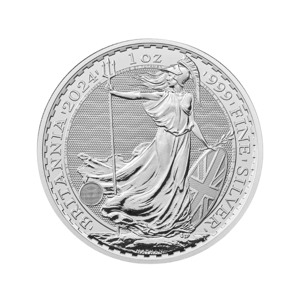
The current rally echoes the historic price surge of 1980, when silver climbed to $55–59 per ounce, nearly doubling within a single year. During that same period, gold rose by approximately 60%.
Historically, silver tends to follow gold’s price direction but with much greater volatility. At the previous cycle peak:
- Gold roughly tripled in price
- Silver rose by more than seven times
This pattern reflects silver’s tendency to “catch up” with gold, often rapidly and aggressively once momentum builds.
Has Silver Reached Its Real All-Time High?
When adjusted for inflation, silver’s 1980 peak would equate to around $190 per ounce in today’s money. This means that, despite the recent rally, silver market price has not yet reached its previous real (inflation-adjusted) high.
By contrast, gold surpassed its inflation-adjusted peak in 2024 and has since moved on to fresh record highs. From a historical perspective, this suggests that silver may still have significant room to run in the existing market conditions.
Read more on the topic here: Silver as a Shield of Purchasing Power
Why Does Silver Move Faster Than Gold?

1. A Much Smaller Market
Silver’s total investment market is estimated at around $200 billion, while gold’s market value runs into the trillions. As a result, relatively small capital inflows can have a much larger price impact on silver.
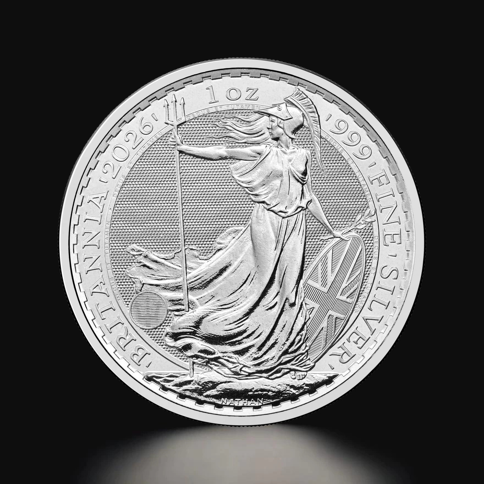
2. Strong Industrial Demand
Unlike gold, silver bullion is not only a store of value. It plays a critical role in modern industry, including:
- Solar panels and photovoltaics
- Electric vehicles
- Semiconductors and electronic components
- Energy grids and AI-related infrastructure
This dual role, monetary metal and industrial input, amplifies price movements during periods of strong economic or technological investment.
3. Persistent Supply Deficits
Silver supply has struggled to keep pace with demand. The market is now in its fifth consecutive year of deficit, with an estimated cumulative shortfall of around 820 million ounces.
Global mine production is growing by only around 1% per year, making silver supply structurally inelastic. In simple terms, higher prices do not quickly result in higher production, a dynamic that can intensify price rallies.
Could Silver Go Much Higher?
Historically, silver traded at a gold-to-silver ratio of around 15:1 for long periods. While today’s ratio is significantly higher, a reversion toward historical norms would imply much higher silver prices if gold remains elevated.
“The price of silver has historically followed gold at a ratio of around 15:1. Based on that relationship, it is entirely possible that within the next five years we could see silver trading at $300 per ounce or more,” commented Max Baklayan of Tavex.
Key Takeaways
- Silver has tripled in price in one year, outperforming most major asset classes
- It remains below its inflation-adjusted all-time high, unlike gold
- A small market size, industrial demand, and persistent supply deficits amplify price movements
- Historically, silver has tended to outperform gold during late-stage bull markets
Gold price (XAU-GBP)
3,267.95 GBP/oz
- GBP110.88
Silver price (XAG-GBP)
50.43 GBP/oz
- GBP0.62