Tavex uses cookies to ensure website functionality and improve your user experience. Collecting data from cookies helps us provide the best experience for you, keeps your account secure and allows us to personalise advert content. You can find out more in our cookie policy.
Please select what cookies you allow us to use
Cookies are small files of letters and digits downloaded and saved on your computer or another device (for instance, a mobile phone, a tablet) and saved in your browser while you visit a website. They can be used to track the pages you visit on the website, save the information you enter or remember your preferences such as language settings as long as you’re browsing the website.
Cookie usage
Necessary cookies
| Cookie name | Cookie description | Cookie duration |
|---|---|---|
| tavex_cookie_consent | Stores cookie consent options selected | 60 weeks |
| tavex_customer | Tavex customer ID | 30 days |
| wp-wpml_current_language | Stores selected language | 1 day |
| AWSALB | AWS ALB sticky session cookie | 6 days |
| AWSALBCORS | AWS ALB sticky session cookie | 6 days |
| NO_CACHE | Used to disable page caching | 1 day |
| PHPSESSID | Identifier for PHP session | Session |
| latest_news | Helps to keep notifications relevant by storing the latest news shown | 29 days |
| latest_news_flash | Helps to keep notifications relevant by storing the latest news shown | 29 days |
| tavex_recently_viewed_products | List of recently viewed products | 1 day |
| tavex_compare_amount | Number of items in product comparison view | 1 day |
Preference cookies
| Cookie name | Cookie description | Cookie duration |
|---|---|---|
| chart-widget-tab-*-*-* | Remembers last chart options (i.e currency, time period, etc) | 29 days |
| archive_layout | Stores selected product layout on category pages | 1 day |
Targeting cookies
| Cookie name | Cookie description | Cookie duration |
|---|---|---|
| cartstack.com-* | Used for tracking abandoned shopping carts | 1 year |
| _omappvp | Used by OptinMonster for determining new vs. returning visitors. Expires in 11 years | 11 years |
| _omappvs | Used by OptinMonster for determining when a new visitor becomes a returning visitor | Session |
| om* | Used by OptinMonster to track interactions with campaigns | Persistent |
Analytical cookies
| Cookie name | Cookie description | Cookie duration |
|---|---|---|
| _ga | Used to distinguish users | 2 years |
| _gid | Used to distinguish users | 24 hours |
| _ga_* | Used to persist session state | 2 years |
| _gac_* | Contains campaign related information | 90 days |
| _gat_gtag_* | Used to throttle request rate | 1 minute |
| _fbc | Facebook advertisement cookie | 2 years |
| _fbp | Facebook cookie for distinguishing unique users | 2 years |

Iran Conflict, Oil Prices and Risk of New Inflation Wave
Published by honor in category Market News on 09.03.2026
Gold price (XAU-GBP)
3,362.88 GBP/oz
- GBP28.21
Silver price (XAG-GBP)
51.33 GBP/oz
- GBP1.34

Quick Summary
- Oil prices pass $100 a barrel for the first time since 2022
- Escalating tensions involving Iran are pushing global oil and natural gas prices higher.
- Brent crude has risen from $60 to $87 per barrel since the start of the year.
- Europe is particularly vulnerable as natural gas prices have nearly doubled.
- Higher energy prices could trigger a second wave of global inflation, similar to the 1970s energy crisis.
Rising Energy Prices Could Drive a New Inflation Wave
The conflict involving Iran and the resulting surge in energy prices could trigger a new wave of inflation in Western economies. Oil prices have risen sharply and natural gas prices in Europe have doubled within days.
If the conflict is resolved quickly, inflationary pressures may remain limited. However, the situation is currently escalating. Qatar was forced to close the world’s largest liquefied natural gas export terminal due to security risks. Saudi Arabia shut down its largest oil refinery following drone attacks. At the same time, the Strait of Hormuz, through which around 20 percent of the world’s oil supply passes, is effectively closed.
Oil markets reacted immediately. Brent crude, which traded around $60 per barrel at the start of the year, has climbed to $100 as of today (9th March 2025)
Central Banks Face a Difficult Policy Choice

Accelerating inflation would place the Federal Reserve and the European Central Bank in a challenging position.
US President Donald Trump has repeatedly argued that interest rates should be lowered in order to reduce the government’s rising debt servicing costs. However, cutting rates during an inflation surge could worsen the problem, since lower borrowing costs tend to stimulate spending and push prices higher.
Financial markets appear to recognise this risk. US government bond yields have risen sharply since the conflict began, indicating investors expect inflationary pressures to increase.
Global Economic Consequences
Higher energy prices could affect major economies differently.
The European Union is particularly vulnerable because it produces little oil. Rising oil and gas prices could push parts of the region toward recession. Natural gas prices across Europe have nearly doubled in just a few weeks, increasing pressure on businesses and households.
The United States is better positioned, as it is currently the world’s largest oil producer. Higher oil prices increase revenues for the domestic energy sector, partially offsetting the broader economic impact.
For China, the situation may become more difficult. The country has relied on discounted Iranian oil imports, and losing access to this supply could raise energy costs. China’s economy is already recovering slowly from a property market collapse and is facing additional pressure from US tariffs.
In early March, China lowered its annual growth forecast to 4.5–5 percent, the lowest level since 1991. While still relatively strong compared with many developed economies, it is modest compared with China’s historic growth rates.
If energy prices continue rising, the global economy could enter a stagflationary environment, where economic growth slows while inflation remains high. Similar conditions were seen during the oil crises of the 1970s.
How Oil Prices Influence Inflation
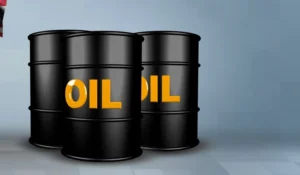
According to Bloomberg Economics, historical data suggests that a 1 percent drop in global oil supply typically increases prices by about 4 percent.
Because roughly one fifth of global oil shipments pass through the Strait of Hormuz, a prolonged closure could significantly disrupt global supply.
Bloomberg estimates that if this disruption persists, the surge in oil prices could rise 80 percent above pre-war levels, reaching roughly $108 per barrel. G7 are set to have an emergency meeting later today.
Using Bloomberg’s SHOK economic model, such a price increase would push US inflation up by about 0.8 percentage points. With US inflation currently around 2.4 percent, this would bring it back above 3 percent, significantly above the Federal Reserve’s target of 2 percent.
The impact would be even larger in Europe:
- Eurozone inflation: +1.1 percentage points
- UK inflation: +1.1 percentage points
- US inflation: +0.8 percentage points
Even if oil prices stabilise near $80 per barrel, inflation would still increase moderately in both the US and Europe.
Natural Gas Prices Are Also Surging
Oil is only part of the inflation picture. Natural gas is especially important for Europe, and its price has risen even faster than oil.
Qatar’s decision to close its liquefied natural gas export terminal due to security risks significantly reduced supply. As a result, European natural gas prices have nearly doubled in less than two weeks.
Although natural gas has a smaller direct effect on inflation compared with oil, sustained price increases still contribute to higher energy bills and production costs across the economy.
Why Oil Markets React So Quickly
Oil prices are extremely sensitive to supply disruptions. Because inventories are relatively small and most oil is consumed quickly, even small changes in supply or demand can lead to dramatic price swings.
A clear example occurred during the 2020 pandemic, when global demand dropped by roughly 10 percent and US oil prices briefly turned negative.
Oil remains one of the most critical inputs in the global economy. Rising energy prices increase transportation and manufacturing costs, which are ultimately passed on to consumers through higher prices.
Could Oil Reach $200 Per Barrel?
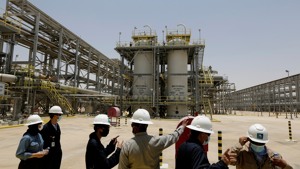
Iranian officials have warned that further escalation could push oil prices much higher.
Revolutionary Guards General Ebrahim Jabbari stated that if Iran’s key facilities are attacked, Tehran could target major economic hubs across the Middle East. He suggested oil prices could rise toward $200 per barrel if the Strait of Hormuz remains closed.
While many analysts consider such extreme price levels unlikely in the near term, they cannot be ruled out if the conflict becomes prolonged.
Risks for Government Debt Markets
A sustained rise in inflation would also affect global bond markets.
Interest payments on US government debt have already surpassed $1.2 trillion annually, exceeding the country’s defense budget of about $0.9 trillion.
If inflation accelerates and investors demand higher yields, borrowing costs could rise further. Some analysts believe that if US 10-year bond yields reached 6–7 percent, annual interest payments could exceed $2 trillion within several years.
Such a scenario would significantly strain the US federal budget.
Lessons From the 1970s Energy Crisis
The current situation has drawn comparisons to the 1970s oil crisis, when the Yom Kippur War triggered an Arab oil embargo against Western nations.
Oil prices tripled within a year, rising from $4 to $12 per barrel, and continued climbing to nearly $40 by 1980. The surge contributed to inflation reaching 15 percent in the United States.
Historically, inflation tends to occur in multiple waves, rather than a single spike.
A Potential Commodity Supercycle
If energy prices remain elevated and geopolitical tensions persist, the global economy could enter another commodity supercycle.
Many commodities reached price lows between 2018 and 2020. Prices surged during the inflation wave of 2021–2022, before stabilising in subsequent years.
A renewed rise in energy prices could trigger the next upward phase in this cycle.
If that happens, the 2020s may eventually be compared to the 1970s, with a similar combination of rising commodity prices, geopolitical tensions, and persistent inflation.
Frequently Asked Questions
Why does the Strait of Hormuz matter for oil prices?
Around 20% of global oil supply passes through the Strait of Hormuz. Any disruption can rapidly reduce supply and push prices higher.
How do oil prices affect inflation?
The impact of rising oil prices could have a large affect on Oil is a key input for transportation, manufacturing, and energy. When oil prices rise, production costs increase and consumer prices follow.
Gold price (XAU-GBP)
3,362.88 GBP/oz
- GBP28.21
Silver price (XAG-GBP)
51.33 GBP/oz
- GBP1.34