Tavex uses cookies to ensure website functionality and improve your user experience. Collecting data from cookies helps us provide the best experience for you, keeps your account secure and allows us to personalise advert content. You can find out more in our cookie policy.
Please select what cookies you allow us to use
Cookies are small files of letters and digits downloaded and saved on your computer or another device (for instance, a mobile phone, a tablet) and saved in your browser while you visit a website. They can be used to track the pages you visit on the website, save the information you enter or remember your preferences such as language settings as long as you’re browsing the website.
Cookie usage
Necessary cookies
| Cookie name | Cookie description | Cookie duration |
|---|---|---|
| tavex_cookie_consent | Stores cookie consent options selected | 60 weeks |
| tavex_customer | Tavex customer ID | 30 days |
| wp-wpml_current_language | Stores selected language | 1 day |
| AWSALB | AWS ALB sticky session cookie | 6 days |
| AWSALBCORS | AWS ALB sticky session cookie | 6 days |
| NO_CACHE | Used to disable page caching | 1 day |
| PHPSESSID | Identifier for PHP session | Session |
| latest_news | Helps to keep notifications relevant by storing the latest news shown | 29 days |
| latest_news_flash | Helps to keep notifications relevant by storing the latest news shown | 29 days |
| tavex_recently_viewed_products | List of recently viewed products | 1 day |
| tavex_compare_amount | Number of items in product comparison view | 1 day |
Preference cookies
| Cookie name | Cookie description | Cookie duration |
|---|---|---|
| chart-widget-tab-*-*-* | Remembers last chart options (i.e currency, time period, etc) | 29 days |
| archive_layout | Stores selected product layout on category pages | 1 day |
Targeting cookies
| Cookie name | Cookie description | Cookie duration |
|---|---|---|
| cartstack.com-* | Used for tracking abandoned shopping carts | 1 year |
| _omappvp | Used by OptinMonster for determining new vs. returning visitors. Expires in 11 years | 11 years |
| _omappvs | Used by OptinMonster for determining when a new visitor becomes a returning visitor | Session |
| om* | Used by OptinMonster to track interactions with campaigns | Persistent |
Analytical cookies
| Cookie name | Cookie description | Cookie duration |
|---|---|---|
| _ga | Used to distinguish users | 2 years |
| _gid | Used to distinguish users | 24 hours |
| _ga_* | Used to persist session state | 2 years |
| _gac_* | Contains campaign related information | 90 days |
| _gat_gtag_* | Used to throttle request rate | 1 minute |
| _fbc | Facebook advertisement cookie | 2 years |
| _fbp | Facebook cookie for distinguishing unique users | 2 years |

Economic Efficiency: Meaning, Types, and Why It Matters
Published by honor in category Market News on 27.01.2026
Gold price (XAU-GBP)
3,388.00 GBP/oz
+ GBP104.66
Silver price (XAG-GBP)
52.63 GBP/oz
+ GBP1.62

Economic efficiency is one of the most widely used concepts in economics when discussing growth, productivity, costs, and living standards. It describes how effectively resources such as labour, capital, raw materials, and time are used to achieve a useful result.
In practice, economic efficiency matters at every level of society:
- Businesses seek efficiency to remain competitive and profitable
- Governments aim to use public resources responsibly
- Households make daily decisions about spending, saving, and investing
At its core, economic efficiency is about achieving better outcomes with limited resources.
What Is Economic Efficiency? (Simple Definition)
Economic efficiency measures the relationship between results and resources used.
- Output can be a product, service, quality improvement, time saved, or social benefit
- Costs include labour, capital, materials, time, risk, and opportunity cost
If the same result is achieved using fewer resources – or a better result is achieved using the same resources – economic efficiency has increased.
Importantly, efficiency is not limited to money. Outcomes may include better health, education, safety, environmental quality, or reduced social costs.
Why Economic Efficiency Matters for Resource Allocation
Resources are limited. Every economic choice involves a trade-off: using resources in one way means they cannot be used elsewhere.
When resources are allocated inefficiently:
- Growth potential declines
- Living standards stagnate
- Costs rise without corresponding benefits
This applies at all levels:
- Firms compare alternatives such as automation, training, or new equipment
- Households weigh consumption against saving and investment
- Governments choose between competing public priorities
The objective is always the same: the best possible result at a reasonable cost.
Types of Economic Efficiency
Economists typically distinguish three main types of economic efficiency
1. Allocative Efficiency
Allocative efficiency occurs when resources are directed toward goods and services that people value most relative to their cost.
In competitive markets, this happens when prices accurately reflect real costs and consumer preferences.
2. Productive (Production) Efficiency
Productive efficiency means producing a given level of output at the lowest possible cost, without wasting labour or capital.
It includes:
- Labour productivity
- Technological efficiency
- Process and organisational efficiency
3. Dynamic Efficiency
Dynamic efficiency focuses on improvement over time through:
- Innovation
- New technologies
- Better products
- Higher quality and lower long-term costs
Dynamic efficiency is essential for long-term competitiveness and economic growth.
These forms are interconnected. An economy can produce cheaply but inefficiently if it produces things people do not want, or lose competitiveness if it fails to innovate.
Key Principles Behind Economic Efficiency
Several core principles underpin most efficiency analysis:
1) Comparison of Alternatives
Efficiency only makes sense when choices exist. It requires comparing different options and evaluating which delivers the best result-to-cost ratio.
2) Marginal Thinking
Economic decisions are often made at the margin:
- One additional worker
- One extra hour of labour
- One more unit of investment
The question is whether the additional benefit exceeds the additional cost.
3) Cost Transparency
Efficiency improves when all costs are understood, including:
- Time
- Risk
- Opportunity cost
- Environmental and social costs
Without transparency, apparent efficiency may be misleading.
How to Measure Economic Efficiency

At the Company Level
Common indicators include:
- Unit costs
- Profit margins
- Asset turnover
- Labour productivity (output per hour worked)
- Cost-efficiency ratios
At the Economy-Wide Level
Typical measures include:
- GDP per capita
- Labour productivity by sector
- Capital investment
- Innovation and technology indicators
Cost-benefit analysis is often used for public projects to compare long-term social costs and benefits.
Comparability is crucial. Measurements must use consistent definitions across time and processes to reflect real improvements, not accounting distortions.
Pareto Efficiency: Meaning and Limitations
A situation is Pareto efficient if no one can be made better off without making someone else worse off.
This concept is useful because it identifies a boundary beyond which trade-offs are unavoidable. However, Pareto efficiency says nothing about fairness. A highly unequal outcome can still be Pareto efficient.
For this reason, Pareto efficiency is an analytical tool, not a moral standard
Efficiency vs Fairness: Is There a Trade-Off?
Efficiency and equity can sometimes conflict.
- Cost-saving reforms may lead to short-term job losses
- Income protection policies may reduce incentives to invest or work
However, some policies improve both efficiency and living standards, such as:
- Education and skills development
- Preventive healthcare
- Digitalisation of services
The key is to assess total social costs and benefits, not just immediate financial outcomes.
Factors That Influence Market Efficiency
Economic efficiency depends on:
- Competition
- Institutional quality
- Regulation
- Access to capital and information
- Infrastructure and human capital
Efficiency declines when markets suffer from:
- Monopoly power
- Asymmetric information
- Externalities such as pollution
- Weak competition
These conditions create hidden social costs that prices do not fully reflect.
Real-World Examples of Economic Efficiency
Business
Process optimisation – automation, better inventory management, and defect reduction – can increase output without proportional cost increases.
Public Sector
Digital administrative services reduce time costs for citizens and allow governments to process more applications using fewer resources.
Households
Energy-efficient home improvements involve upfront costs but lead to long-term savings and improved comfort.
How to Increase Economic Efficiency
A practical approach includes:
- Clearly defining the desired outcome
- Measuring all ongoing costs (money, time, risk)
- Identifying bottlenecks
- Comparing alternatives using clear economic metrics
This framework applies equally to personal decisions, business strategy, and public policy.
Advanced Tools for Efficiency Analysis
Total Factor Productivity (TFP)
TFP captures improvements not explained by more labour or capital, such as better technology, management, or organisation.
Production Possibilities Frontier (PPF)
The PPF shows the maximum output achievable with available resources. Operating below it indicates inefficiency; moving it outward requires innovation.
Benchmarking
Comparing performance with industry leaders helps identify concrete steps to improve efficiency in processes, training, and technology.
Hidden Costs and Externalities

Low cost does not always mean high efficiency
Pollution, health impacts, and infrastructure damage are often externalised and paid for later by society. Accounting-based efficiency may therefore differ from true economic efficiency.
Including externalities is especially important in public policy and large infrastructure projects.
Economic Efficiency and Institutions
Efficiency depends heavily on the institutional environment.
Clear rules, contract enforcement, and predictable regulation reduce transaction costs and encourage productive investment. Conversely, delays, uncertainty, and corruption waste resources without creating value.
Digitalisation, transparency, and stable legal frameworks can significantly increase efficiency without major material investment.
Common Misconceptions About Economic Efficiency
- Efficiency does not always mean job cuts
- It is a continuous process, not a one-time fix
- Over-optimisation can reduce resilience
Sustainable efficiency balances optimisation with flexibility and long-term stability.
How Economic Efficiency Affects Living Standards
Higher efficiency allows:
- Higher wages
- Better public services
- Greater resilience to economic shocks
At the firm level, higher productivity improves competitiveness and investment capacity. At the societal level, it means better access to goods, services, and time savings.
Small efficiency gains, accumulated over time, can significantly raise overall living standards.
Economic Efficiency in the Gold Bullion Industry
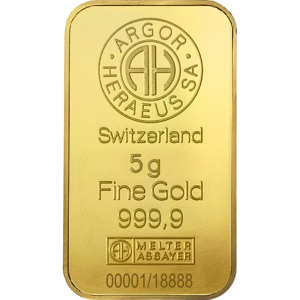
Economic efficiency is especially important in the gold bullion industry, where prices are closely tied to global spot markets and profit margins are relatively narrow. Because the underlying value of gold is externally determined, efficiency across the entire value chain directly affects investor costs.
Refining and Production
Efficient refineries minimise material loss, energy use, and processing time while maintaining high purity standards. Even small efficiency gains can have a meaningful impact due to the high value of gold.
Supply Chain and Distribution
Gold bullion requires secure transport, storage, and handling. Efficient logistics, inventory management, and vaulting reduce overheads and help keep investor premiums closer to the spot price.
Pricing and Market Transparency
The bullion market is highly price-transparent. Efficient markets are characterised by narrow bid–ask spreads, real-time pricing linked to spot gold, and low transaction costs, allowing prices to reflect global supply and demand accurately.
Product Standardisation and Liquidity
Standardised bars with recognised weights, purity, and certification improve efficiency by reducing information costs and increasing liquidity. Investors can more easily compare, trade, and resell bullion across markets.
Dealer Operations and Trust
For dealers, efficient pricing systems, streamlined order processing, and robust compliance reduce costs and execution time. Over the long term, clear rules and trusted market infrastructure further enhance efficiency by lowering uncertainty and transaction costs.
Conclusion
Economic efficiency is a practical concept: achieving more useful results with fewer resources. It encompasses productivity, cost efficiency, technological progress, and effective resource allocation.
When measured correctly and combined with attention to social and environmental costs, economic efficiency becomes a foundation for sustainable growth and higher quality of life.
Frequently Asked Questions (FAQ)
What does economic efficiency mean in simple terms?
Economic efficiency describes how well resources are used to achieve useful outcomes. Using fewer resources for the same or better result means higher efficiency.
What is the difference between efficiency and productivity?
Productivity measures output per unit of input (such as labour), while economic efficiency considers all resources, costs, and outcomes. Productivity is one component of efficiency.
Can an economy be efficient but unfair?
Yes. An outcome can be economically efficient while still being socially unequal. This is why efficiency is often balanced with equity considerations.
Why is economic efficiency important for living standards?
Higher efficiency enables more goods and services to be produced with limited resources, supporting long-term growth, higher incomes, and better quality of life.
Gold price (XAU-GBP)
3,388.00 GBP/oz
+ GBP104.66
Silver price (XAG-GBP)
52.63 GBP/oz
+ GBP1.62