Tavex uses cookies to ensure website functionality and improve your user experience. Collecting data from cookies helps us provide the best experience for you, keeps your account secure and allows us to personalise advert content. You can find out more in our cookie policy.
Please select what cookies you allow us to use
Cookies are small files of letters and digits downloaded and saved on your computer or another device (for instance, a mobile phone, a tablet) and saved in your browser while you visit a website. They can be used to track the pages you visit on the website, save the information you enter or remember your preferences such as language settings as long as you’re browsing the website.
Cookie usage
Necessary cookies
| Cookie name | Cookie description | Cookie duration |
|---|---|---|
| tavex_cookie_consent | Stores cookie consent options selected | 60 weeks |
| tavex_customer | Tavex customer ID | 30 days |
| wp-wpml_current_language | Stores selected language | 1 day |
| AWSALB | AWS ALB sticky session cookie | 6 days |
| AWSALBCORS | AWS ALB sticky session cookie | 6 days |
| NO_CACHE | Used to disable page caching | 1 day |
| PHPSESSID | Identifier for PHP session | Session |
| latest_news | Helps to keep notifications relevant by storing the latest news shown | 29 days |
| latest_news_flash | Helps to keep notifications relevant by storing the latest news shown | 29 days |
| tavex_recently_viewed_products | List of recently viewed products | 1 day |
| tavex_compare_amount | Number of items in product comparison view | 1 day |
Preference cookies
| Cookie name | Cookie description | Cookie duration |
|---|---|---|
| chart-widget-tab-*-*-* | Remembers last chart options (i.e currency, time period, etc) | 29 days |
| archive_layout | Stores selected product layout on category pages | 1 day |
Targeting cookies
| Cookie name | Cookie description | Cookie duration |
|---|---|---|
| cartstack.com-* | Used for tracking abandoned shopping carts | 1 year |
| _omappvp | Used by OptinMonster for determining new vs. returning visitors. Expires in 11 years | 11 years |
| _omappvs | Used by OptinMonster for determining when a new visitor becomes a returning visitor | Session |
| om* | Used by OptinMonster to track interactions with campaigns | Persistent |
Analytical cookies
| Cookie name | Cookie description | Cookie duration |
|---|---|---|
| _ga | Used to distinguish users | 2 years |
| _gid | Used to distinguish users | 24 hours |
| _ga_* | Used to persist session state | 2 years |
| _gac_* | Contains campaign related information | 90 days |
| _gat_gtag_* | Used to throttle request rate | 1 minute |
| _fbc | Facebook advertisement cookie | 2 years |
| _fbp | Facebook cookie for distinguishing unique users | 2 years |

What Gives Money Value? Gold vs Bitcoin vs Fiat Explained
Published by honor in category Precious Metal Information Guides on 26.02.2026
Gold price (XAU-GBP)
3,585.36 GBP/oz
+ GBP71.17
Silver price (XAG-GBP)
56.95 GBP/oz
+ GBP2.26

In a world of rising inflation, expanding money supply, and growing financial uncertainty, more investors are asking a fundamental question:
What actually gives money its value?
Is it government authority? Physical scarcity? Mathematical code? Or simply collective belief?
Today, three dominant forms of money coexist:
- Fiat currencies (such as the pound, dollar, and euro)
- Gold
- Bitcoin
Each derives value in a different way. Understanding those foundations helps investors make rational, diversified decisions.
Quick Answer: What Gives Money Value?
Money has value because people collectively accept it as:
- A medium of exchange
- A store of value
- A unit of account
- A means of settling debts
However, the source of that acceptance differs between fiat money, gold, and Bitcoin.
What Is Value in Economics?
Value is subjective. It reflects what individuals are willing to exchange for something at a specific time.
In financial markets, value is typically shaped by:
- Scarcity – How limited supply is
- Utility – How useful something is
- Trust – Confidence in stability
- Expectation – Belief about future purchasing power
Money is unusual because we do not consume it. We hold it because we expect it to retain value long enough to exchange it later. That expectation, shared across society, is what sustains monetary systems.
Why Does Fiat Money Have Value?
Fiat currency is money declared legal tender by a government, without being backed by a physical commodity such as gold or silver.
Its value comes primarily from institutional structure and public confidence.
What Supports Fiat Currency Value?
Fiat money retains value because:
- Governments require taxes to be paid in it
- Courts recognise it as legal settlement for debts
- Employers and businesses price wages and goods in it
- Central banks manage monetary policy
- The public continues to trust the system
Unlike gold, fiat money can be created in unlimited quantities. When managed responsibly, this flexibility supports economic growth. When mismanaged, it leads to inflation.
The Core Risk of Fiat
If money supply expands too quickly:
- Purchasing power declines
- Inflation rises
- Savings erode over time
This gradual loss of value is one of the key reasons investors turn to alternative assets.
Why Does Gold Have Value?
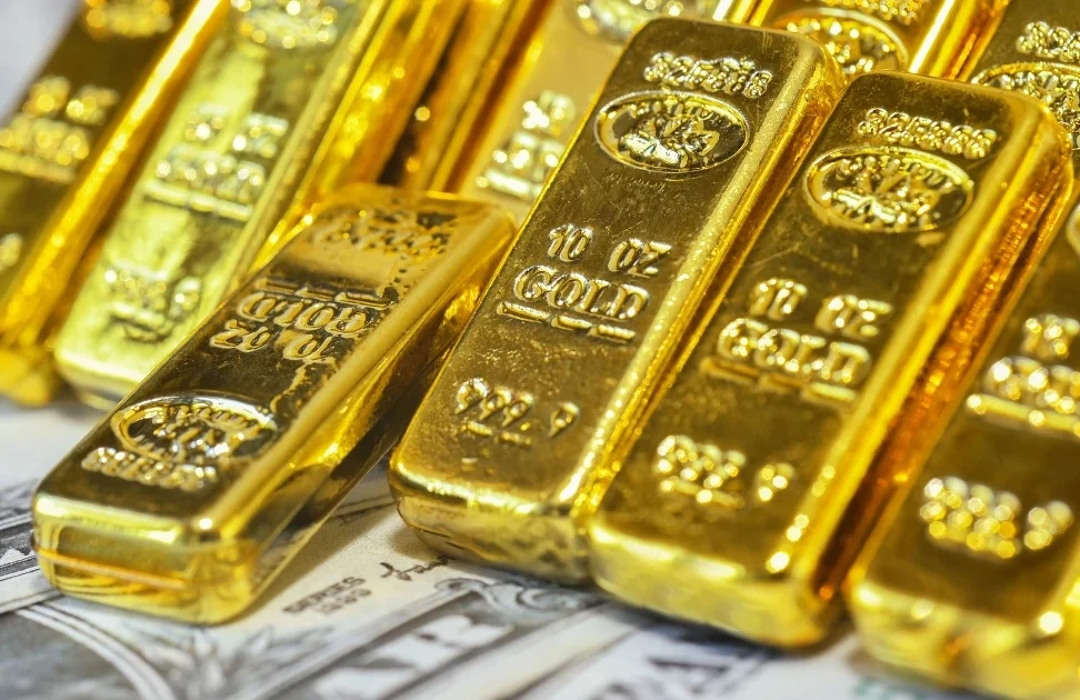
Gold has functioned as money and a store of wealth for thousands of years. Unlike fiat currency, its value is not dependent on government decree.
Its worth is rooted in both physical properties and historical legitimacy.

What Gives Gold Its Enduring Value?
Gold derives value from:
- Natural scarcity – Global supply grows slowly (around 1–2% per year)
- Durability – It does not rust, decay, or degrade
- Divisibility and portability – High value in small quantities
- Global recognition – Universally accepted across cultures
- Monetary history – Used as money for millennia
- Central bank reserves – Governments still hold it
Gold’s strength lies in its independence. It cannot be printed, digitally expanded, or created by political decision.
How Is Gold Priced?
Gold is primarily traded rather than consumed. Its price reflects broader economic conditions, including:
- Inflation expectations
- Interest rate movements
- Geopolitical tensions
- Currency strength
- Investor sentiment
- Mining production levels
When trust in fiat systems weakens, gold demand often rises.
Why Does Bitcoin Have Value?

Bitcoin was created in 2009 in response to the global financial crisis. It was designed as a decentralised alternative to traditional banking systems.
Unlike fiat currency, Bitcoin’s supply is fixed by code.
What Supports Bitcoin’s Value?
Bitcoin derives value from:
- Fixed supply cap – Only 21 million will ever exist
- Decentralisation – No central authority controls issuance
- Blockchain transparency – Public ledger verifies transactions
- Global network adoption – Millions of users worldwide
- Digital scarcity narrative – Often described as “digital gold”
Its scarcity is algorithmic rather than physical.
The Key Differences from Gold
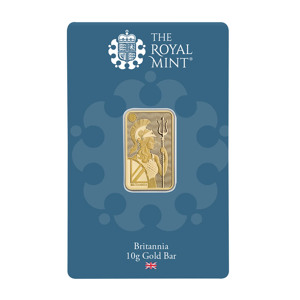
While Bitcoin shares similarities with gold, important distinctions remain:
- Bitcoin is entirely digital
- It has a short historical track record
- It is significantly more volatile
- It depends on technological infrastructure
Its value ultimately rests on confidence in its network and continued adoption.
Gold vs Bitcoin vs Fiat: At a Glance
| Feature | Fiat Currency | Gold | Bitcoin |
| Supply Limit | No | Naturally limited | 21 million cap |
| Backing | Government trust | Physical security | Mathematical code |
| Tangible | No | Yes | No |
| Inflation Resistance | Low | Historically strong | Designed to resist |
| Volatility | Low-moderate | Moderate | High |
| Historical Track Record | Centuries | Thousands of years | Since 2009 |
Frequently Asked Questions (FAQs)
What gives money value?
Money has value because people collectively trust and accept it as a medium of exchange and store of purchasing power.
Why is gold considered a hedge against inflation?
Because its supply grows slowly and cannot be expanded by government policy.
Why is Bitcoin limited to 21 million?
Its code was intentionally designed to create digital scarcity and prevent inflation.
Can fiat currency lose value?
Yes. If governments expand money supply excessively or lose public trust, purchasing power declines.
Is Bitcoin safer than gold?
Gold has a longer history of stability. Bitcoin offers innovation but carries higher volatility.
Can These Three Forms of Money Coexist?

In practice, they already do.
Most individuals:
- Use fiat for daily transactions
- Hold gold as long-term wealth protection
- Invest in Bitcoin for speculative growth
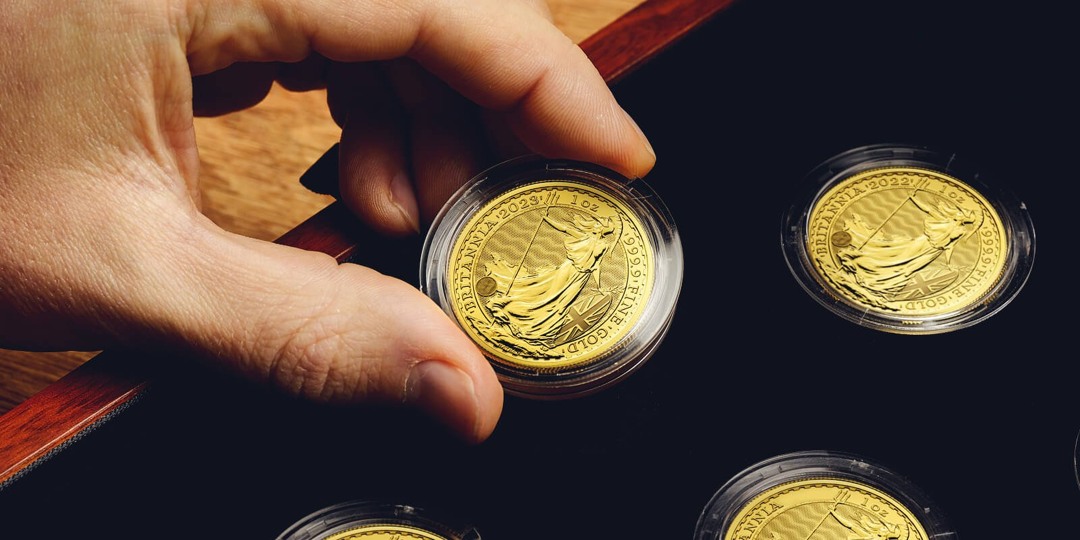
Even gold coins that are legal tender are rarely used in everyday purchases because their intrinsic value exceeds face value.
Rather than replacing one another entirely, these assets serve different roles within diversified portfolios.
Final Thoughts: Value Is Ultimately Belief
At its core, money functions because people believe it functions.
- Fiat relies on institutional trust.
- Gold relies on scarcity and historical validation.
- Bitcoin relies on mathematical certainty and network confidence.
None is inherently superior in all contexts. Each represents a different foundation of value.
For investors navigating inflation and monetary uncertainty, spreading risk across asset classes may be the most rational strategy.
Ultimately, value is subjective, and the balance between gold, Bitcoin, and fiat depends on what you believe will endure.
Gold price (XAU-GBP)
3,585.36 GBP/oz
+ GBP71.17
Silver price (XAG-GBP)
56.95 GBP/oz
+ GBP2.26