Tavex uses cookies to ensure website functionality and improve your user experience. Collecting data from cookies helps us provide the best experience for you, keeps your account secure and allows us to personalise advert content. You can find out more in our cookie policy.
Please select what cookies you allow us to use
Cookies are small files of letters and digits downloaded and saved on your computer or another device (for instance, a mobile phone, a tablet) and saved in your browser while you visit a website. They can be used to track the pages you visit on the website, save the information you enter or remember your preferences such as language settings as long as you’re browsing the website.
Cookie usage
Necessary cookies
| Cookie name | Cookie description | Cookie duration |
|---|---|---|
| tavex_cookie_consent | Stores cookie consent options selected | 60 weeks |
| tavex_customer | Tavex customer ID | 30 days |
| wp-wpml_current_language | Stores selected language | 1 day |
| AWSALB | AWS ALB sticky session cookie | 6 days |
| AWSALBCORS | AWS ALB sticky session cookie | 6 days |
| NO_CACHE | Used to disable page caching | 1 day |
| PHPSESSID | Identifier for PHP session | Session |
| latest_news | Helps to keep notifications relevant by storing the latest news shown | 29 days |
| latest_news_flash | Helps to keep notifications relevant by storing the latest news shown | 29 days |
| tavex_recently_viewed_products | List of recently viewed products | 1 day |
| tavex_compare_amount | Number of items in product comparison view | 1 day |
Preference cookies
| Cookie name | Cookie description | Cookie duration |
|---|---|---|
| chart-widget-tab-*-*-* | Remembers last chart options (i.e currency, time period, etc) | 29 days |
| archive_layout | Stores selected product layout on category pages | 1 day |
Targeting cookies
| Cookie name | Cookie description | Cookie duration |
|---|---|---|
| cartstack.com-* | Used for tracking abandoned shopping carts | 1 year |
| _omappvp | Used by OptinMonster for determining new vs. returning visitors. Expires in 11 years | 11 years |
| _omappvs | Used by OptinMonster for determining when a new visitor becomes a returning visitor | Session |
| om* | Used by OptinMonster to track interactions with campaigns | Persistent |
Analytical cookies
| Cookie name | Cookie description | Cookie duration |
|---|---|---|
| _ga | Used to distinguish users | 2 years |
| _gid | Used to distinguish users | 24 hours |
| _ga_* | Used to persist session state | 2 years |
| _gac_* | Contains campaign related information | 90 days |
| _gat_gtag_* | Used to throttle request rate | 1 minute |
| _fbc | Facebook advertisement cookie | 2 years |
| _fbp | Facebook cookie for distinguishing unique users | 2 years |

Valcambi or PAMP: Differences and How to Choose?
Published by honor in category Market News on 16.01.2026
Gold price (XAU-GBP)
3,530.55 GBP/oz
- GBP44.70
Silver price (XAG-GBP)
55.34 GBP/oz
- GBP1.80

Tavex has been an official partner of Valcambi since 2008 and PAMP since 2006. Both are well-established Swiss refineries producing high-purity gold bars that meet internationally recognised investment standards.
While the intrinsic value of gold is primarily determined by the spot price, factors such as product range, packaging, security features, and premiums can influence the final price and practicality for individual investors.
Below, we explore where Valcambi and PAMP are similar, and where they differ.
Reputation and History
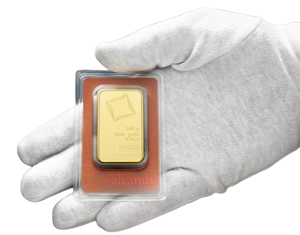
Switzerland is one of the world’s most important hubs for refining and trading precious metals, which explains why Valcambi and PAMP frequently appear in both private and institutional investment portfolios.
Valcambi has been active since the 1960s and is known for its large-scale production capacity and industrial efficiency. It serves a broad client base, including banks, bullion traders, and major players in the precious metals market.
PAMP (Produits Artistiques Métaux Précieux) entered the market slightly later but quickly gained recognition through premium positioning and a strong, consistent visual identity.
In practice, both brands are considered “investment standard” products. Their reputations are supported by strict quality control, transparent product identification, and international accreditations.
Refining Standards: Purity and Quality Control
For investors, the most important technical factor is gold purity. Both Valcambi and PAMP produce investment-grade gold bars with a purity of 999.9, which is the industry standard.
With identical weight and purity, the intrinsic gold value is the same regardless
Differences between refineries are rarely related to chemical purity. Instead, they tend to involve traceability systems, batch control, serialisation, and labelling standards. Best practices include clear marking of weight, purity, manufacturer, and serial number, alongside rigorous internal testing procedures.
Product Range: Standard Bars and Special Formats
Valcambi offers one of the widest ranges of investment gold formats, from small weights such as 1 g, 2.5 g, and 5 g – ideal for gradual accumulation – to larger bars such as 1 oz, 20 g, 50 g, and 100 g.

One of its most popular products is the CombiBar, a divisible bar designed for flexibility when selling or gifting while remaining compact for storage.
Both refineries also produce silver products, including large-format bars such as 1 kg cast silver bars.
PAMP also offers a broad range of weights, but its product lines are more strongly branded and positioned toward the premium segment. For investors who buy regularly, availability of specific weights and prevailing market conditions usually matter more than the brand itself.

A popular entry-level PAMP product is the 2.5 g gold bar, which balances affordability with recognisable branding.
Design and Aesthetics: When Appearance Matters
Design does not affect gold content, but it can influence premiums and buyer preference.
Valcambi adopts a clean, functional aesthetic focused on clarity and standardisation. This appeals to investors who view gold purely as a financial instrument rather than a decorative object.
PAMP, by contrast, is known for distinctive designs and iconic series, which can be attractive for gifts or collectors. From a purely investment perspective, design matters mainly insofar as the market is willing to pay a slightly higher premium for recognisability.
PAMP also produces themed collections such as the Lunar series, inspired by the Chinese lunar calendar.
Packaging, Certification, and Anti-Counterfeiting
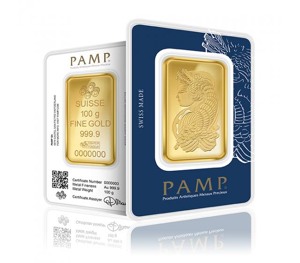
Both brands commonly use sealed assay card packaging, which combines the bar, certification, and identification details in one unit. When packaging remains intact, inspection and resale are usually quicker and easier.
Anti-counterfeiting measures vary by series and year but typically include serial numbers, precision stamping, controlled surfaces, and sometimes additional features such as micro-inscriptions or specialised graphics.
From a practical standpoint, the key rule is simple: store gold bars in their original, undamaged packaging unless there is a specific reason not to.
Premiums, Pricing, and Investor Value
For the same weight, PAMP products often carry a slightly higher premium, particularly for visually distinctive or premium-packaged series.
Valcambi tends to offer more competitive pricing for standard investment formats
Investors should consider not only the purchase price but also the expected buy-sell spread. If the objective is purely long-term gold exposure, premium differences may matter more than aesthetics. If gifting, collectability, or brand recognition are part of the goal, the higher premium may be justified.
Resale and Liquidity
Liquidity depends on recognition and ease of acceptance by dealers and buyers. Both Valcambi and PAMP benefit from strong international recognition, supporting smooth resale.
In practice, resale conditions are influenced by factors such as intact packaging, legible serial numbers, and overall condition.
When comparing gold bars, it helps to think in scenarios: selling quickly, selling part of a holding, or holding long-term. Standard formats and sealed packaging often provide an advantage – regardless of brand.
Choosing Between Valcambi and PAMP
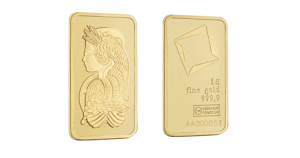
There is no universally “better” option – only what best suits your goals:
- Valcambi is often preferred for standardisation, regular purchases in multiple weights, and minimising premiums.
- PAMP may be preferred for premium presentation, gifting, and strong visual recognition.
Best practice is to compare the specific product – weight, packaging, and premium – under current market conditions, rather than choosing based solely on brand.
Conclusion
Valcambi and PAMP are two established Swiss refiners that meet the highest standards of the precious metals market.
Their differences lie mainly in presentation – product lines, design, packaging, and premiums – rather than gold purity. For investors, this means focusing on purpose, format, and resale conditions.
Both brands are reliable choices as an investment decision, provided the gold bars are authentic and stored correctly.
Frequently Asked Questions
What is the main difference between Valcambi and PAMP?
Both are Swiss, LBMA-accredited refiners with strong international recognition. Valcambi focuses more on standardised investment solutions, while PAMP emphasises premium design and branding.
Is there a difference in gold purity?
No. Both typically produce 999.9 purity gold bars in line with international standards.
Why do PAMP bars sometimes carry higher premiums?
Higher premiums are usually linked to design, packaging, and production costs rather than higher gold value.
How do liquidity and resale compare?
Both brands enjoy strong liquidity. The gold spot price remains the main factor at resale, not the bar’s design.
Gold price (XAU-GBP)
3,530.55 GBP/oz
- GBP44.70
Silver price (XAG-GBP)
55.34 GBP/oz
- GBP1.80