Tavex uses cookies to ensure website functionality and improve your user experience. Collecting data from cookies helps us provide the best experience for you, keeps your account secure and allows us to personalise advert content. You can find out more in our cookie policy.
Please select what cookies you allow us to use
Cookies are small files of letters and digits downloaded and saved on your computer or another device (for instance, a mobile phone, a tablet) and saved in your browser while you visit a website. They can be used to track the pages you visit on the website, save the information you enter or remember your preferences such as language settings as long as you’re browsing the website.
Cookie usage
Necessary cookies
| Cookie name | Cookie description | Cookie duration |
|---|---|---|
| tavex_cookie_consent | Stores cookie consent options selected | 60 weeks |
| tavex_customer | Tavex customer ID | 30 days |
| wp-wpml_current_language | Stores selected language | 1 day |
| AWSALB | AWS ALB sticky session cookie | 6 days |
| AWSALBCORS | AWS ALB sticky session cookie | 6 days |
| NO_CACHE | Used to disable page caching | 1 day |
| PHPSESSID | Identifier for PHP session | Session |
| latest_news | Helps to keep notifications relevant by storing the latest news shown | 29 days |
| latest_news_flash | Helps to keep notifications relevant by storing the latest news shown | 29 days |
| tavex_recently_viewed_products | List of recently viewed products | 1 day |
| tavex_compare_amount | Number of items in product comparison view | 1 day |
Preference cookies
| Cookie name | Cookie description | Cookie duration |
|---|---|---|
| chart-widget-tab-*-*-* | Remembers last chart options (i.e currency, time period, etc) | 29 days |
| archive_layout | Stores selected product layout on category pages | 1 day |
Targeting cookies
| Cookie name | Cookie description | Cookie duration |
|---|---|---|
| cartstack.com-* | Used for tracking abandoned shopping carts | 1 year |
| _omappvp | Used by OptinMonster for determining new vs. returning visitors. Expires in 11 years | 11 years |
| _omappvs | Used by OptinMonster for determining when a new visitor becomes a returning visitor | Session |
| om* | Used by OptinMonster to track interactions with campaigns | Persistent |
Analytical cookies
| Cookie name | Cookie description | Cookie duration |
|---|---|---|
| _ga | Used to distinguish users | 2 years |
| _gid | Used to distinguish users | 24 hours |
| _ga_* | Used to persist session state | 2 years |
| _gac_* | Contains campaign related information | 90 days |
| _gat_gtag_* | Used to throttle request rate | 1 minute |
| _fbc | Facebook advertisement cookie | 2 years |
| _fbp | Facebook cookie for distinguishing unique users | 2 years |

JPMorgan: What Events Could Stop the Rise in Gold Prices?
Published by honor in category Market News on 23.02.2026
Gold price (XAU-GBP)
3,796.60 GBP/oz
- GBP9.20
Silver price (XAG-GBP)
60.95 GBP/oz
- GBP1.92

Quick Summary
- Gold prices have risen more than 170 percent over the past five years.
- Geopolitical instability and central bank demand have been the main drivers.
- JPMorgan identifies two primary risks: declining central bank purchases and weaker retail investor demand.
- Analysts believe these risks are possible but unlikely in the near term.
There are several arguments against the continued rise in gold prices. Overall, however, the factors supporting the rise are still in place, write analysts at the major US bank JPMorgan, reports the Kitco portal.
“The gold market has seen a wild rally over the past five years, with prices rising more than 170 percent,” wrote Kriti Gupta, director of JPMorgan Private Bank, and Justin Biemann, the bank’s global investment strategist. “There have been a number of reasons for this, but the most important of these are geopolitical volatility and fragmentation, which have led investors to increasingly look to the precious metal.”
“Now add to this concerns about currency depreciation, economic growth, inflation and irresponsible fiscal policy – these factors are not yet fully factored into asset prices,” they added. “So it is not surprising that precious metals are a popular asset at the moment.”
“Gold’s one-month return after major geopolitical shocks has averaged 1.8 percent, with a median of 3 percent, outperforming other asset classes,” the bank’s experts added.
Why Does Gold Perform Well During Geopolitical Shocks?
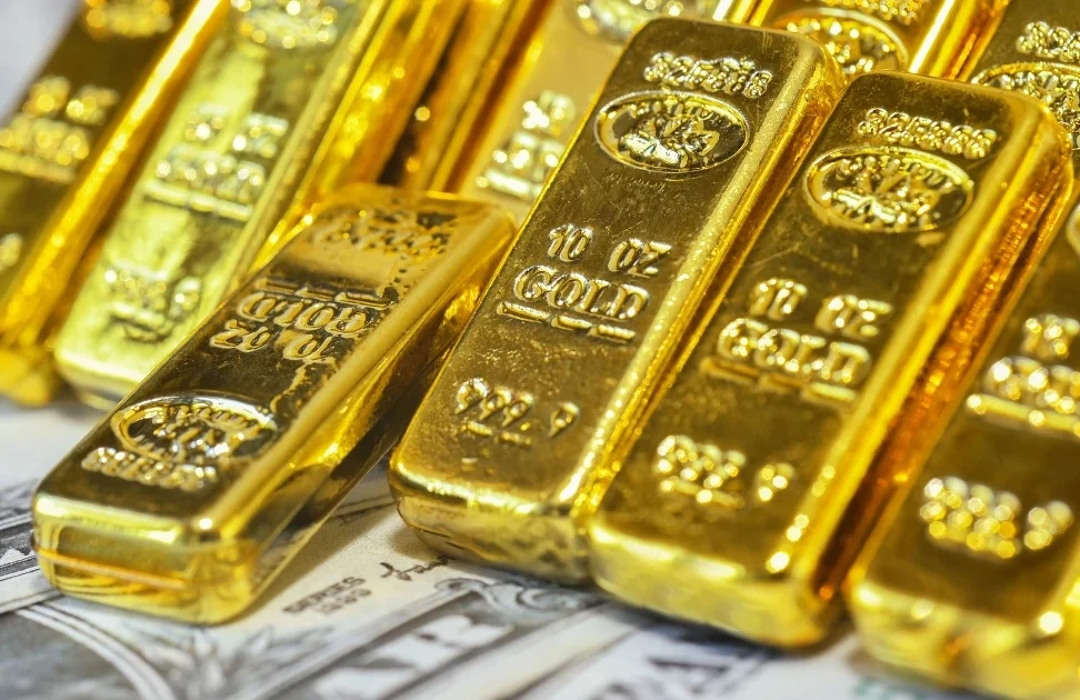
Gold is traditionally viewed as a safe-haven asset. During periods of war, political instability, sanctions, or financial stress, investors often move capital into gold as a store of value.
According to JPMorgan data:
- Average one-month return after major geopolitical shocks: 1.8 percent
- Median return: 3 percent
- Outperformance versus most other asset classes
This historical behaviour reinforces gold’s role in portfolio diversification and crisis protection.
If gold is doing well in geopolitically turbulent times and the geopolitical storm is showing no signs of abating, what could stop gold’s rise? Gupta and Biemann identify two of the biggest risks. The first potential risk is a fading interest from central banks.
What If Central Banks Reduce Gold Purchases?
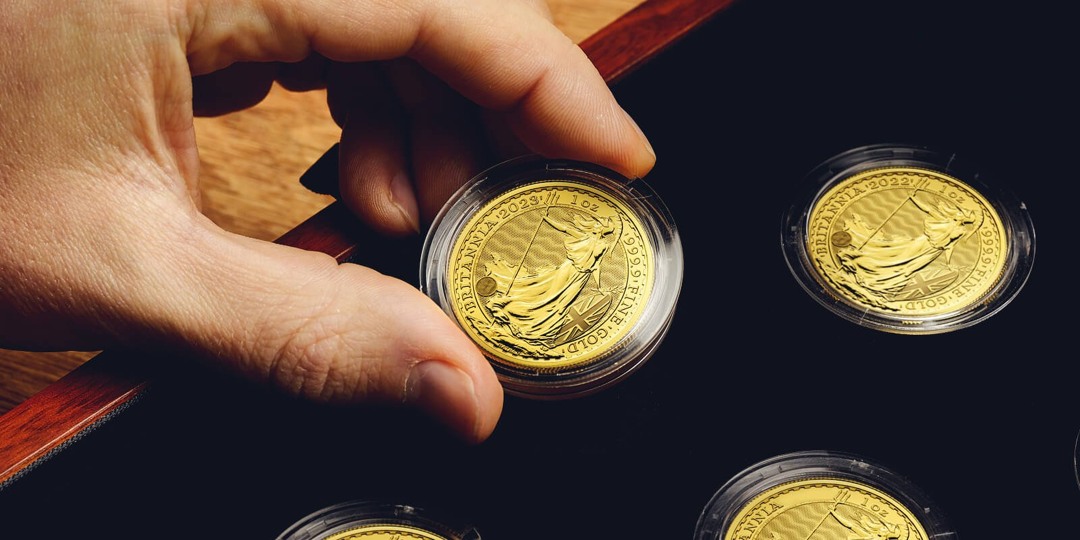
“Central banks have been the biggest drivers of gold price increases,” they write. “Net purchases have doubled since the start of the Ukraine war (2022). Central banks have increased their purchases as they seek to reduce the share of US dollars in reserves. This trend began after the US froze Russia’s foreign exchange reserves.”
Countries With the Largest Gold Reserves
- United States
- Germany
- Italy
- France
- Russia
“What if the structural demand of the world’s central banks declines?” the analysts asked. “Or worse, what if they start selling gold instead?”
Gupta and Biemann pointed out that this has happened before in history. “Between 1999 and 2002, the UK held a series of auctions in which over 50 percent of the UK’s gold reserves were sold. The money was invested in foreign currencies,” they added. “At the same time, the Swiss franc was delinked from gold.”
The price of gold fell 13 percent in three months after the UK’s gold sales, an equivalent drop of $650 an ounce at today’s prices. The selling spree only stopped when central banks signed the Washington Accord on gold, which limited and coordinated large gold sales. The accord expired in 2019, but central banks have since become large buyers, not sellers.
“In theory, this means that central banks could sell gold. It is also possible that demand growth could stall,” Gupta and Biemann wrote. “But it is unlikely that this will happen. At least not anytime soon.”
“In 2025, gold accounted for only 19 percent of reserves in developing countries, compared with 47 percent in developed countries,” they wrote. “China stands out among developing countries. The Chinese are the United States’ biggest competitors and have been actively increasing their gold reserves. China’s gold reserves rank seventh in the world, but they still account for only 8.6 percent of their total reserves. If the trend continues, China still has plenty of room to increase its purchases. And they are not alone: Poland, India and Brazil have also been driving structural demand.”
But looking at the G10 central banks, there is no sign that they are planning to start selling gold. “Even for the Federal Reserve, this would require a number of legislative changes and a major shift in over a century of policy,” JPMorgan analysts wrote. “A survey conducted last year by the World Gold Council found that 95 percent of central banks expect global central bank gold reserves to increase. 5 percent believed they would remain the same and no one expects a decline,” they added.
Read more on the topic here: Top 7 Countries with Most Gold Reserves
What If Retail Investors Stop Buying?

Another potential risk is that retail investors are turning their backs on precious metals.
“Don’t forget about retail investors,” Gupta and Biemann warn. “They have also been buying up gold. These new buyers are building positions to protect themselves against geopolitical and macroeconomic risks.”
Gold ETFs (exchange-traded funds) are a good reflection of retail investors’ interest in gold. In total, ETFs hold about 100 million ounces of gold, which is only 8 percent of central bank gold reserves. The record has not been broken either. The record was 110 million ounces and it dates back to 2020.
While demand may increase, the funds are not currently in a position to influence prices very much.
There are several reasons why retail investors may be more interested in gold:
- Portfolio diversification
- Inflation protection
- Crisis outperformance
- Low correlation with equities
- Protection against currency and bond depreciation
JPMorgan’s global research unit said in December that it expected Chinese insurance companies and investors abandoning crypto assets and turning to precious metals to boost gold in the new year.
“The rise in gold prices has not been linear and will not be. But we believe that the trends that are driving prices higher have not exhausted themselves,” said Natasha Kaneva, head of commodity markets strategy at JPMorgan. “Long-term reserve building and investor interest will continue.”
Additional Factors Supporting Gold Prices
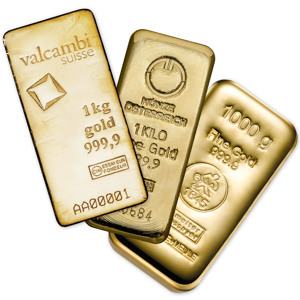
A weaker dollar, lower U.S. interest rates, and economic and political uncertainty have generally been positive factors for gold in financial systems. All of these have played a role in the current price increase. The investment bank also pointed out that gold is protecting against both currency depreciation and bond depreciation.
Frequently Asked Questions
What could cause gold prices to fall?
Gold prices could decline if central banks begin selling reserves, inflation falls sharply, interest rates rise significantly, or geopolitical tensions ease.
Are central banks likely to sell gold soon?
Current data suggests this is unlikely. Most central banks expect reserves to increase rather than decrease.
Do retail investors significantly influence gold prices?
Retail investors contribute to demand, particularly through ETFs, but central banks have been the dominant structural buyers in recent years.
Is gold still considered a safe-haven asset?
Historically, gold has performed well during periods of economic uncertainty, currency depreciation, and geopolitical instability.
Gold price (XAU-GBP)
3,796.60 GBP/oz
- GBP9.20
Silver price (XAG-GBP)
60.95 GBP/oz
- GBP1.92