Tavex uses cookies to ensure website functionality and improve your user experience. Collecting data from cookies helps us provide the best experience for you, keeps your account secure and allows us to personalise advert content. You can find out more in our cookie policy.
Please select what cookies you allow us to use
Cookies are small files of letters and digits downloaded and saved on your computer or another device (for instance, a mobile phone, a tablet) and saved in your browser while you visit a website. They can be used to track the pages you visit on the website, save the information you enter or remember your preferences such as language settings as long as you’re browsing the website.
Cookie usage
Necessary cookies
| Cookie name | Cookie description | Cookie duration |
|---|---|---|
| tavex_cookie_consent | Stores cookie consent options selected | 60 weeks |
| tavex_customer | Tavex customer ID | 30 days |
| wp-wpml_current_language | Stores selected language | 1 day |
| AWSALB | AWS ALB sticky session cookie | 6 days |
| AWSALBCORS | AWS ALB sticky session cookie | 6 days |
| NO_CACHE | Used to disable page caching | 1 day |
| PHPSESSID | Identifier for PHP session | Session |
| latest_news | Helps to keep notifications relevant by storing the latest news shown | 29 days |
| latest_news_flash | Helps to keep notifications relevant by storing the latest news shown | 29 days |
| tavex_recently_viewed_products | List of recently viewed products | 1 day |
| tavex_compare_amount | Number of items in product comparison view | 1 day |
Preference cookies
| Cookie name | Cookie description | Cookie duration |
|---|---|---|
| chart-widget-tab-*-*-* | Remembers last chart options (i.e currency, time period, etc) | 29 days |
| archive_layout | Stores selected product layout on category pages | 1 day |
Targeting cookies
| Cookie name | Cookie description | Cookie duration |
|---|---|---|
| cartstack.com-* | Used for tracking abandoned shopping carts | 1 year |
| _omappvp | Used by OptinMonster for determining new vs. returning visitors. Expires in 11 years | 11 years |
| _omappvs | Used by OptinMonster for determining when a new visitor becomes a returning visitor | Session |
| om* | Used by OptinMonster to track interactions with campaigns | Persistent |
Analytical cookies
| Cookie name | Cookie description | Cookie duration |
|---|---|---|
| _ga | Used to distinguish users | 2 years |
| _gid | Used to distinguish users | 24 hours |
| _ga_* | Used to persist session state | 2 years |
| _gac_* | Contains campaign related information | 90 days |
| _gat_gtag_* | Used to throttle request rate | 1 minute |
| _fbc | Facebook advertisement cookie | 2 years |
| _fbp | Facebook cookie for distinguishing unique users | 2 years |

Gold Price Suffers Sharpest Weekly Fall in Six Years Amid Growing Pressure
Published by honor in category Market News on 25.03.2026
Gold price (XAU-GBP)
3,393.26 GBP/oz
+ GBP122.86
Silver price (XAG-GBP)
54.33 GBP/oz
+ GBP3.10

- Gold prices have recently declined due to technical breakdowns and rising energy-driven inflation risks.
- Analysts warn of short-term bearish momentum, with potential downside below $4,000 in extreme scenarios.
- However, the long-term outlook for gold remains positive due to ongoing geopolitical uncertainty and global debt concerns.
Gold Under Pressure as Iran Conflict Continues
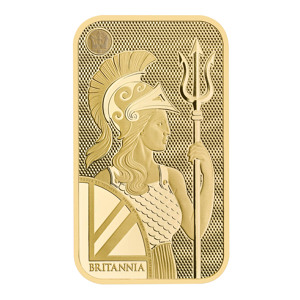
With the war in Iran showing no clear end, some analysts are warning gold investors of further downside risk. Rising energy prices are increasing inflationary pressures, which could force central banks to pause monetary easing and adopt a more cautious, wait-and-see approach.
The gold market recently experienced a significant technical setback when prices fell below the 50-day moving average, just under $5,000 per ounce.
According to OANDA senior market analyst Kelvin Wong, speaking to Kitco News, the sharp drop marked a potential turning point for gold.
Technical Turning Point in the Gold Market
From a technical perspective, the recent decline suggests that the 23% rally from the February 2, 2026 low of $4,402 to the March 2 high of $5,420 may have been a temporary rebound—often referred to as a “dead cat bounce”.
This implies that:
- The previous uptrend may not be sustainable
- Markets could now shift into multi-week bearish momentum
The data supports this view:
- Gold closed the week down more than 8%, its biggest weekly drop since the COVID-19 pandemic
- Spot gold fell to $4,584.10, down over 1.7% on the day
- Silver dropped nearly 14%, with prices at $68.96, down more than 5% daily
Why Gold Prices Are Falling

Several key factors are driving the current gold sell-off:
1. Profit-Taking and Speculation
Rob Howorth of US Bank Wealth Management noted that the decline is partly due to speculative activity earlier in the year. Investors who bought above $5,000 are now reducing positions.
“Speculators are now faced with a difficult choice… many positions are now at a loss, and the situation could worsen.”
2. Rising Energy Prices and Inflation Risk
Higher oil and energy prices are increasing inflation expectations. This reduces the likelihood of interest rate cuts and pressures gold.
3. Stronger Monetary Policy Expectations
Markets are scaling back expectations for Federal Reserve rate cuts, which typically weakens gold.
Middle East Geopolitics and Gold Prices
Future price movements will largely depend on developments in the Middle East, particularly:
- Whether the Strait of Hormuz reopens
- The extent of damage to global energy infrastructure
- Resolution of supply chain disruptions
Bernard Dahda of Natixis predicts gold could trade between $4,600 and $4,700 in the near term but warns of growing downside risks.
Bearish Scenario
- Continued destruction of energy infrastructure
- Prolonged war
- Central banks forced to raise interest rates
This could push gold below $4,000 per ounce
Bullish Recovery Scenario
- Limited damage to energy supply
- Oil prices stabilise
- Central banks increase gold purchases
Prices could rebound above $5,000
Federal Reserve Policy and Market Expectations

Financial markets have already begun adjusting expectations for U.S. monetary policy.
According to Commerzbank’s Thu Lan Nguyen:
- Markets previously expected ~2.5 rate cuts
- Now, even one full cut is no longer fully priced in
Federal Reserve Chair Jerome Powell has emphasised inflation risks, suggesting that further easing may be delayed if inflation persists.
Why This Matters for Gold
- Higher interest rates → stronger US dollar
- Higher bond yields → lower gold demand
As a result, gold prices could continue to face downward pressure if inflation remains elevated.
Why Gold Isn’t Acting Like a Safe Haven
Despite geopolitical tensions, gold has not behaved as a traditional safe haven. Analysts point to one key reason:
Inflation driven by energy prices
Central banks are currently holding rates steady, monitoring how the conflict affects inflation expectations rather than immediately supporting markets.
Short-Term Outlook: Critical Weeks Ahead
The next 4–6 weeks could be decisive.
Key factors to watch:
- Corporate budget adjustments ahead of summer
- Tax season in mid-April
- Central bank responses to inflation
Investor sentiment is likely to remain cautious, with limited economic data expected in the near term.
Long-Term Gold Outlook Remains Strong
Despite short-term weakness, analysts remain bullish over the long term.
Ole Hansen of Saxo Bank highlights that the fundamental drivers of gold demand remain unchanged:
- Geopolitical instability
- Rising sovereign debt
- Global economic uncertainty
He notes that investor sentiment may need to reset before confidence returns:
“Investors need to lose their emotional attachment to gold before regaining interest.”
Key Takeaways
- Gold is currently facing short-term bearish pressure
- Inflation and interest rate expectations are key drivers
- Geopolitical developments in the Middle East remain critical
- Long-term fundamentals for gold remain intact
Final Thought
While the recent correction has shaken investor confidence, most analysts agree that the gold bull market is not necessarily over. A period of consolidation may be needed before the next upward move.
As one strategist summarised:
“I wouldn’t say the bull market is over, but I would prefer to see consolidation before buying more actively on dips.”
Gold price (XAU-GBP)
3,393.26 GBP/oz
+ GBP122.86
Silver price (XAG-GBP)
54.33 GBP/oz
+ GBP3.10