Tavex uses cookies to ensure website functionality and improve your user experience. Collecting data from cookies helps us provide the best experience for you, keeps your account secure and allows us to personalise advert content. You can find out more in our cookie policy.
Please select what cookies you allow us to use
Cookies are small files of letters and digits downloaded and saved on your computer or another device (for instance, a mobile phone, a tablet) and saved in your browser while you visit a website. They can be used to track the pages you visit on the website, save the information you enter or remember your preferences such as language settings as long as you’re browsing the website.
Cookie usage
Necessary cookies
| Cookie name | Cookie description | Cookie duration |
|---|---|---|
| tavex_cookie_consent | Stores cookie consent options selected | 60 weeks |
| tavex_customer | Tavex customer ID | 30 days |
| wp-wpml_current_language | Stores selected language | 1 day |
| AWSALB | AWS ALB sticky session cookie | 6 days |
| AWSALBCORS | AWS ALB sticky session cookie | 6 days |
| NO_CACHE | Used to disable page caching | 1 day |
| PHPSESSID | Identifier for PHP session | Session |
| latest_news | Helps to keep notifications relevant by storing the latest news shown | 29 days |
| latest_news_flash | Helps to keep notifications relevant by storing the latest news shown | 29 days |
| tavex_recently_viewed_products | List of recently viewed products | 1 day |
| tavex_compare_amount | Number of items in product comparison view | 1 day |
Preference cookies
| Cookie name | Cookie description | Cookie duration |
|---|---|---|
| chart-widget-tab-*-*-* | Remembers last chart options (i.e currency, time period, etc) | 29 days |
| archive_layout | Stores selected product layout on category pages | 1 day |
Targeting cookies
| Cookie name | Cookie description | Cookie duration |
|---|---|---|
| cartstack.com-* | Used for tracking abandoned shopping carts | 1 year |
| _omappvp | Used by OptinMonster for determining new vs. returning visitors. Expires in 11 years | 11 years |
| _omappvs | Used by OptinMonster for determining when a new visitor becomes a returning visitor | Session |
| om* | Used by OptinMonster to track interactions with campaigns | Persistent |
Analytical cookies
| Cookie name | Cookie description | Cookie duration |
|---|---|---|
| _ga | Used to distinguish users | 2 years |
| _gid | Used to distinguish users | 24 hours |
| _ga_* | Used to persist session state | 2 years |
| _gac_* | Contains campaign related information | 90 days |
| _gat_gtag_* | Used to throttle request rate | 1 minute |
| _fbc | Facebook advertisement cookie | 2 years |
| _fbp | Facebook cookie for distinguishing unique users | 2 years |

Gold Jewellery Demand Fell in 2025 - Investors Shift to Bars and Coins
Published by honor in category Market News on 25.02.2026
Gold price (XAU-GBP)
3,519.08 GBP/oz
- GBP25.65
Silver price (XAG-GBP)
55.16 GBP/oz
- GBP0.19

The latest annual data from the World Gold Council shows a sharp decline in global gold jewellery demand in 2025, falling between 18% and over 20% across major markets.
The trend is especially visible in traditional gold-consuming nations such as China and India, where record-high gold prices have discouraged discretionary jewellery purchases. Instead, consumers are increasingly turning to investment gold products, including bars and coins.
Gold is no longer viewed primarily as ornamentation. It is increasingly perceived as a strategic financial asset.
Quick Summary
- Gold jewellery demand fell 18–20% in 2025
- China and India saw the sharpest declines
- Consumers are shifting toward gold bars and coins
- Global jewellery market reached $242 billion
- Market projected to grow to $254 billion in 2026, driven mainly by higher prices
- Analysts expect a further 5–7% demand decline next year
Why Is Gold Jewellery Demand Falling?

1) Record Gold Prices
The primary driver behind falling jewellery demand is price. As gold has risen sharply in recent years, affordability has become a key issue for consumers.
High prices impact jewellery differently than investment products:
- Jewellery purchases are often discretionary
- Buyers are more price-sensitive
- Emotional purchases are delayed during price spikes
In markets like China and India, historically the world’s largest jewellery consumers, the response has been clear: buy less jewellery, buy more investment gold.
Gold: Ornament or Investment?
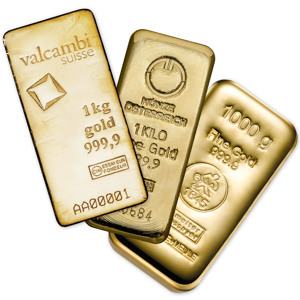
The distinction between jewellery and investment gold is becoming more defined.
“There is a clear distinction between investment gold (bars, coins) and jewellery, which may have artistic or sentimental value but is not an investment,” explains Max Baklayan of Tavex.
“When selling jewellery back, only the scrap price of the gold is paid, which is lower than for investment products.”
Key Differences: Jewellery vs Investment Gold
| Feature | Gold Jewellery | Gold Bars & Coins |
| Purpose | Ornamental/sentimental | Wealth preservation |
| Resale Value | Scrap gold price | Market gold price |
| Premiums | High retail & design premiums | Lower investment premiums |
| Liquidity | Less efficient | Highly liquid |
When jewellery is resold, craftsmanship and branding rarely retain value. The seller typically receives only the melt value, often below the original purchase price.
Investment gold, by contrast, is priced closer to the global spot price and is designed specifically for capital preservation.
Global Jewellery Market Still Growing, But Why?
Despite declining demand in volume terms, the global jewellery market reached $242 billion in 2025 and is forecast to grow to $254 billion in 2026.
This apparent contradiction is explained by:
- Higher gold prices increasing overall market value
- Premiumisation in certain segments
- Growth in branded luxury jewellery
However, analysts forecast another 5–7% decline in physical demand in 2026, suggesting price-driven revenue growth rather than increased consumer appetite.
Jewellery Market Breakdown: What’s Selling?
Segmentation within the global jewellery market shows:
- Rings: Nearly 33% market share (largest category)
- Necklaces: Approximately 22% share
- Bracelets and earrings: Each below 20% share
- Personalised pieces gaining traction
- Engagement rings remain the dominant product within rings
Personalisation continues to attract consumers, particularly in milestone purchases such as engagements and weddings. However, even in these categories, buyers are becoming more price-conscious.
The Bigger Trend: Financialisation of Gold
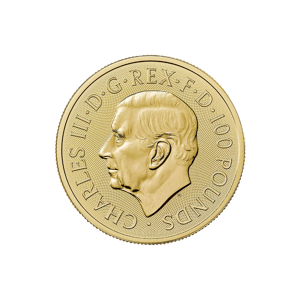
Gold’s rising price has reshaped consumer psychology.
Instead of viewing gold primarily as:
- A cultural symbol
- A wedding tradition
- A fashion statement
Consumers increasingly see it as:
- A hedge against inflation
- Protection against currency risk
- A portfolio diversification tool
This shift is especially strong among younger, financially literate buyers who compare gold returns to equities, ETFs, and other asset classes.

Frequently Asked Questions (FAQ)
Why is gold jewellery demand declining?
Because high gold prices are discouraging discretionary purchases and pushing consumers toward investment-grade gold products.
Is gold jewellery a good investment?
Generally, no. Jewellery carries high design premiums and typically resells at scrap value, not retail price.
Why are gold bars and coins more popular?
They offer better liquidity, lower premiums, and clearer pricing tied to the global gold market.
Will jewellery demand recover?
Analysts expect continued pressure in 2026, with forecasts indicating another 5–7% decline unless prices stabilise.
Conclusion: A Structural Shift in Gold Demand
The 2025 data confirms a structural shift in the global gold market. Jewellery demand is weakening, particularly in traditional strongholds like China and India, while investment gold is gaining traction.
Gold is increasingly viewed not as decoration, but as financial protection.
As long as prices remain elevated and macroeconomic uncertainty persists, the divergence between jewellery and investment demand is likely to continue.
Gold price (XAU-GBP)
3,519.08 GBP/oz
- GBP25.65
Silver price (XAG-GBP)
55.16 GBP/oz
- GBP0.19