Tavex uses cookies to ensure website functionality and improve your user experience. Collecting data from cookies helps us provide the best experience for you, keeps your account secure and allows us to personalise advert content. You can find out more in our cookie policy.
Please select what cookies you allow us to use
Cookies are small files of letters and digits downloaded and saved on your computer or another device (for instance, a mobile phone, a tablet) and saved in your browser while you visit a website. They can be used to track the pages you visit on the website, save the information you enter or remember your preferences such as language settings as long as you’re browsing the website.
Cookie usage
Necessary cookies
| Cookie name | Cookie description | Cookie duration |
|---|---|---|
| tavex_cookie_consent | Stores cookie consent options selected | 60 weeks |
| tavex_customer | Tavex customer ID | 30 days |
| wp-wpml_current_language | Stores selected language | 1 day |
| AWSALB | AWS ALB sticky session cookie | 6 days |
| AWSALBCORS | AWS ALB sticky session cookie | 6 days |
| NO_CACHE | Used to disable page caching | 1 day |
| PHPSESSID | Identifier for PHP session | Session |
| latest_news | Helps to keep notifications relevant by storing the latest news shown | 29 days |
| latest_news_flash | Helps to keep notifications relevant by storing the latest news shown | 29 days |
| tavex_recently_viewed_products | List of recently viewed products | 1 day |
| tavex_compare_amount | Number of items in product comparison view | 1 day |
Preference cookies
| Cookie name | Cookie description | Cookie duration |
|---|---|---|
| chart-widget-tab-*-*-* | Remembers last chart options (i.e currency, time period, etc) | 29 days |
| archive_layout | Stores selected product layout on category pages | 1 day |
Targeting cookies
| Cookie name | Cookie description | Cookie duration |
|---|---|---|
| cartstack.com-* | Used for tracking abandoned shopping carts | 1 year |
| _omappvp | Used by OptinMonster for determining new vs. returning visitors. Expires in 11 years | 11 years |
| _omappvs | Used by OptinMonster for determining when a new visitor becomes a returning visitor | Session |
| om* | Used by OptinMonster to track interactions with campaigns | Persistent |
Analytical cookies
| Cookie name | Cookie description | Cookie duration |
|---|---|---|
| _ga | Used to distinguish users | 2 years |
| _gid | Used to distinguish users | 24 hours |
| _ga_* | Used to persist session state | 2 years |
| _gac_* | Contains campaign related information | 90 days |
| _gat_gtag_* | Used to throttle request rate | 1 minute |
| _fbc | Facebook advertisement cookie | 2 years |
| _fbp | Facebook cookie for distinguishing unique users | 2 years |

Global Gold Demand Hits Record High Above 5,000 Tonnes as Investment Surge Drives Market
Published by honor in category Market News on 09.04.2026
Gold price (XAU-GBP)
3,535.33 GBP/oz
- GBP27.77
Silver price (XAG-GBP)
55.31 GBP/oz
- GBP1.94

Global demand for gold surpassed 5,000 tonnes for the first time in history in 2025, according to the World Gold Council (WGC). Based on the Council’s baseline forecast, demand is expected to remain strong this year.
The surge in demand was driven largely by investment activity. Demand for physical gold – coins and bars – reached its highest level in 12 years, while purchases of exchange-traded funds (ETFs) also rose sharply.
Interest in gold has been increasing rapidly in recent years among both investors and central banks. Many are gradually reducing their exposure to currencies, particularly by scaling back investments in government bonds.
The sharp rise in gold prices also played a significant role, attracting a wave of new investors to the market, the WGC noted.
Central banks purchased a total of 863 tonnes of gold last year. While this is lower than in the previous three years, it remains historically high.
At the same time, jewellery demand declined significantly in volume terms due to rising prices. However, the market showed resilience: in dollar terms, jewellery demand grew by around 20%.
Despite the strong increase in prices, gold production rose by only 1% to 3,672 tonnes. The remaining demand was largely met through recycled gold from the secondary market.
Investment Demand Reaches Record Highs
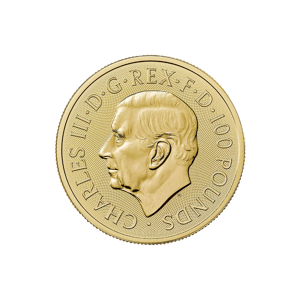
Investment demand climbed to 2,175 tonnes last year – a new all-time high, surpassing the previous record of 1,805 tonnes set in 2020.
For comparison, in 2024 investment demand was nearly half that level. At that time, rising gold prices were driven primarily by central bank purchases, whereas in 2025 private investors played the leading role.
ETFs accounted for 801 tonnes of demand, with inflows increasing by 84% compared to 2024. Meanwhile, demand for physical gold (coins and bars) reached 1,374 tonnes.
According to the WGC, investors turned to gold mainly for diversification. Key drivers included:
- Geopolitical and geo-economic uncertainty
- A weakening US dollar
- Elevated stock market valuations
- Falling interest rates
The rapid rise in prices also helped attract new participants into the market.
Regionally, demand for physical gold was particularly strong in China, where purchases of coins and bars were roughly double those of the United States and Europe combined.
Central Bank Purchases Remain Elevated

Central banks bought 863 tonnes of gold last year – the lowest level in four years, but still historically high.
It is important to view this in context. Between 2022 and 2024, annual central bank purchases exceeded 1,000 tonnes each year – an unprecedented period in history. Against this backdrop, 2025 remains a strong year.
For the second consecutive year, the largest official buyer was the National Bank of Poland, which added 102 tonnes to its reserves. Other major buyers included:
- Kazakhstan (57 tonnes)
- Brazil (43 tonnes)
- Azerbaijan (38 tonnes)
- China (27 tonnes)
Notably, more than half of global purchases remain unattributed, as only officially disclosed data is published. Some market participants speculate that China’s actual purchases could be significantly higher than reported.
In total, at least 21 central banks increased their gold reserves by one tonne or more. On the selling side, only four central banks reported transactions, including the Bank of Russia, which sold just over 6 tonnes.
Although higher prices have slightly tempered central bank buying, due to gold’s growing share in reserves – there are no signs of declining interest. Gold continues to be viewed as a strategically important asset, the WGC emphasised.
Jewellery Demand Under Pressure

Demand from the jewellery sector fell by 18% year-on-year to 1,542 tonnes. In key markets such as India and China, volumes declined by around a quarter.
This trend is not surprising, as jewellery demand tends to be highly sensitive to price increases. However, in value terms, the sector remained strong, with demand reaching record levels in dollar terms.
Declines were less pronounced in Europe and the United States, while the Middle East saw a more moderate contraction.
Demand from the industrial and technology sector edged down by 1% to 333 tonnes. This segment currently accounts for just 6.6% of total demand, limiting its overall impact on prices.
Outlook for 2026
According to the World Gold Council, geopolitical developments will continue to play a major role in shaping gold prices this year. Central bank demand is expected to remain stable at current levels, while strong investment demand, both in ETFs and physical gold, is likely to persist.
The supply of recycled gold is projected to increase, although not enough to fully meet demand. Gold mining output is also expected to rise modestly, by approximately 113 tonnes.
The WGC also noted that investment in gold in Europe remains well below 2022 levels, suggesting significant growth potential. Meanwhile, demand in Asia continues to expand steadily.
Six key factors are expected to support strong investment demand in the coming year:
- Declining real interest rates (nominal rates minus inflation)
- Increased volatility in bond markets
- Elevated stock market valuations
- Strength of the US dollar relative to other currencies
- Ongoing geopolitical risks
- Continued central bank purchases acting as a demand anchor
Gold price (XAU-GBP)
3,535.33 GBP/oz
- GBP27.77
Silver price (XAG-GBP)
55.31 GBP/oz
- GBP1.94