Tavex uses cookies to ensure website functionality and improve your user experience. Collecting data from cookies helps us provide the best experience for you, keeps your account secure and allows us to personalise advert content. You can find out more in our cookie policy.
Please select what cookies you allow us to use
Cookies are small files of letters and digits downloaded and saved on your computer or another device (for instance, a mobile phone, a tablet) and saved in your browser while you visit a website. They can be used to track the pages you visit on the website, save the information you enter or remember your preferences such as language settings as long as you’re browsing the website.
Cookie usage
Necessary cookies
| Cookie name | Cookie description | Cookie duration |
|---|---|---|
| tavex_cookie_consent | Stores cookie consent options selected | 60 weeks |
| tavex_customer | Tavex customer ID | 30 days |
| wp-wpml_current_language | Stores selected language | 1 day |
| AWSALB | AWS ALB sticky session cookie | 6 days |
| AWSALBCORS | AWS ALB sticky session cookie | 6 days |
| NO_CACHE | Used to disable page caching | 1 day |
| PHPSESSID | Identifier for PHP session | Session |
| latest_news | Helps to keep notifications relevant by storing the latest news shown | 29 days |
| latest_news_flash | Helps to keep notifications relevant by storing the latest news shown | 29 days |
| tavex_recently_viewed_products | List of recently viewed products | 1 day |
| tavex_compare_amount | Number of items in product comparison view | 1 day |
Preference cookies
| Cookie name | Cookie description | Cookie duration |
|---|---|---|
| chart-widget-tab-*-*-* | Remembers last chart options (i.e currency, time period, etc) | 29 days |
| archive_layout | Stores selected product layout on category pages | 1 day |
Targeting cookies
| Cookie name | Cookie description | Cookie duration |
|---|---|---|
| cartstack.com-* | Used for tracking abandoned shopping carts | 1 year |
| _omappvp | Used by OptinMonster for determining new vs. returning visitors. Expires in 11 years | 11 years |
| _omappvs | Used by OptinMonster for determining when a new visitor becomes a returning visitor | Session |
| om* | Used by OptinMonster to track interactions with campaigns | Persistent |
Analytical cookies
| Cookie name | Cookie description | Cookie duration |
|---|---|---|
| _ga | Used to distinguish users | 2 years |
| _gid | Used to distinguish users | 24 hours |
| _ga_* | Used to persist session state | 2 years |
| _gac_* | Contains campaign related information | 90 days |
| _gat_gtag_* | Used to throttle request rate | 1 minute |
| _fbc | Facebook advertisement cookie | 2 years |
| _fbp | Facebook cookie for distinguishing unique users | 2 years |


Quick Answer: What Are the Strongest Currencies in the World?
The strongest currencies in the world are typically measured by their value against the US dollar. As of 2026, the top currencies include:
- Kuwaiti Dinar (KWD)
- Bahraini Dinar (BHD)
- Omani Rial (OMR)
- Jordanian Dinar (JOD)
- British Pound (GBP)
- Cayman Islands Dollar (KYD)
- Swiss Franc (CHF)
- Euro (EUR)
- US Dollar (USD)
These currencies are considered “strong” due to high exchange rates, economic stability, and global trust.
What Does “Strong Currency” Mean?

A strong currency refers to a currency that has:
- High value relative to others (especially USD or EUR)
- Low inflation rates
- Stable economic backing
- Strong demand in global markets
However, strength does not always mean a country is economically “better”, it simply reflects purchasing power and exchange rate positioning.
Top 10 Strongest Currencies in the World (2026)
| Rank | Currency | Code | Approx Value vs USD |
| 1 | Kuwaiti Dinar | KWD | ~3.25 USD |
| 2 | Bahraini Dinar | BHD | ~2.65 USD |
| 3 | Omani Rial | OMR | ~2.60 USD |
| 4 | Jordanian Dinar | JOD | ~1.41 USD |
| 5 | British Pound | GBP | ~1.25 USD |
| 6 | Cayman Islands Dollar | KYD | ~1.20 USD |
| 7 | Euro | EUR | ~1.08 USD |
| 8 | Swiss Franc | CHF | ~1.10 USD |
| 9 | US Dollar | USD | 1.00 |
| 10 | Canadian Dollar | CAD | ~0.74 USD |
Why Are Middle Eastern Currencies So Strong?
A large number of the strongest currencies come from Gulf countries. This is mainly due to:
1. Oil Wealth
Countries like Kuwait and Bahrain have vast oil reserves, which:
- Generate consistent export income
- Support government spending
- Strengthen currency demand
2. Currency Pegs
Many Gulf currencies are pegged to the US dollar, creating:
- Stability in exchange rates
- Predictability for investors
- Lower volatility
3. Low Population, High Revenue
High GDP per capita and controlled monetary systems contribute to strong valuation.
The Strongest Major Global Currencies
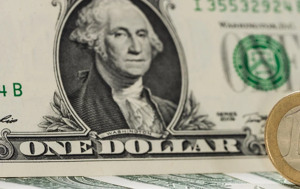
While Gulf currencies top the list numerically, globally traded currencies include:
British Pound (GBP)
- One of the oldest currencies still in use
- Strong financial sector (London)
- High global liquidity
Swiss Franc (CHF)
- Safe-haven currency during crises
- Backed by political neutrality and strong banking
Euro (EUR)
- Used across multiple major European economies
- Second most traded currency globally
US Dollar (USD)
- World reserve currency
- Dominates global trade and commodities pricing
Strongest Currency vs Most Valuable Currency
These terms are often confused:
- Most Valuable Currency: Highest exchange rate (e.g., Kuwaiti Dinar)
- Strongest Currency: Broader concept including stability, trust, and global use (e.g., USD, CHF)
For example:
- The Kuwaiti Dinar is the most valuable
- The US Dollar is the most dominant
Key Factors That Determine Currency Strength
1. Interest Rates
Higher rates attract foreign investors, increasing demand.
2. Inflation
Low inflation preserves purchasing power.
3. Economic Stability
Strong GDP growth and low debt support currency value.
4. Trade Balance
Countries with export surpluses tend to have stronger currencies.
5. Political Stability
Investor confidence depends heavily on governance.
Strongest Currency in Europe
The Swiss Franc (CHF) and British Pound (GBP) are generally considered the strongest European currencies.
- CHF is known for safety and stability
- GBP benefits from London’s financial markets
Strongest Currency in the World: Historical Perspective
Currency rankings change over time depending on:
- Commodity prices (especially oil)
- Interest rate cycles
- Geopolitical events
- Central bank policies
For example:
- Oil price drops can weaken Gulf currencies
- Financial crises often strengthen safe havens like CHF
Final Thoughts: What Strong Currencies Mean for Investors
Understanding the strongest currencies helps investors:
- Identify safe-haven assets
- Plan international travel and currency exchange
- Diversify holdings across economies
For everyday customers, strong currencies often mean:
- Better purchasing power abroad
- More predictable exchange rates
For investors, they represent:
- Stability during uncertainty
- Protection against inflation in weaker currencies
Key Takeaway
The strongest currencies in the world are not just about high exchange rates, they reflect economic power, stability, and global trust. While Gulf currencies dominate in value, global currencies like the US dollar, pound, and euro remain central to the financial system.
FAQs: Strongest Currencies in the World
What is the strongest currency in the world right now?
The Kuwaiti Dinar (KWD) is currently the strongest currency by value.
Why is the British pound so strong?
The UK’s financial sector, historical stability, and global demand contribute to its strength.
Is a stronger currency always better?
Not necessarily. A very strong currency can make exports more expensive and hurt trade competitiveness.
What is the most stable currency?
The Swiss Franc (CHF) is widely considered the most stable currency globally.
Why isn’t the US dollar the strongest?
The US dollar prioritises global liquidity and trade dominance over a high exchange rate.
Gold price (XAU-GBP)
3,515.86 GBP/oz
- GBP30.82
Silver price (XAG-GBP)
55.43 GBP/oz
- GBP1.46