Tavex uses cookies to ensure website functionality and improve your user experience. Collecting data from cookies helps us provide the best experience for you, keeps your account secure and allows us to personalise advert content. You can find out more in our cookie policy.
Please select what cookies you allow us to use
Cookies are small files of letters and digits downloaded and saved on your computer or another device (for instance, a mobile phone, a tablet) and saved in your browser while you visit a website. They can be used to track the pages you visit on the website, save the information you enter or remember your preferences such as language settings as long as you’re browsing the website.
Cookie usage
Necessary cookies
| Cookie name | Cookie description | Cookie duration |
|---|---|---|
| tavex_cookie_consent | Stores cookie consent options selected | 60 weeks |
| tavex_customer | Tavex customer ID | 30 days |
| wp-wpml_current_language | Stores selected language | 1 day |
| AWSALB | AWS ALB sticky session cookie | 6 days |
| AWSALBCORS | AWS ALB sticky session cookie | 6 days |
| NO_CACHE | Used to disable page caching | 1 day |
| PHPSESSID | Identifier for PHP session | Session |
| latest_news | Helps to keep notifications relevant by storing the latest news shown | 29 days |
| latest_news_flash | Helps to keep notifications relevant by storing the latest news shown | 29 days |
| tavex_recently_viewed_products | List of recently viewed products | 1 day |
| tavex_compare_amount | Number of items in product comparison view | 1 day |
Preference cookies
| Cookie name | Cookie description | Cookie duration |
|---|---|---|
| chart-widget-tab-*-*-* | Remembers last chart options (i.e currency, time period, etc) | 29 days |
| archive_layout | Stores selected product layout on category pages | 1 day |
Targeting cookies
| Cookie name | Cookie description | Cookie duration |
|---|---|---|
| cartstack.com-* | Used for tracking abandoned shopping carts | 1 year |
| _omappvp | Used by OptinMonster for determining new vs. returning visitors. Expires in 11 years | 11 years |
| _omappvs | Used by OptinMonster for determining when a new visitor becomes a returning visitor | Session |
| om* | Used by OptinMonster to track interactions with campaigns | Persistent |
Analytical cookies
| Cookie name | Cookie description | Cookie duration |
|---|---|---|
| _ga | Used to distinguish users | 2 years |
| _gid | Used to distinguish users | 24 hours |
| _ga_* | Used to persist session state | 2 years |
| _gac_* | Contains campaign related information | 90 days |
| _gat_gtag_* | Used to throttle request rate | 1 minute |
| _fbc | Facebook advertisement cookie | 2 years |
| _fbp | Facebook cookie for distinguishing unique users | 2 years |

The First Gold Coins: How Ancient Civilisations Created the First Money
Published by honor in category Precious Metal Information Guides on 11.03.2026
Gold price (XAU-GBP)
3,545.70 GBP/oz
+ GBP124.27
Silver price (XAG-GBP)
56.98 GBP/oz
+ GBP3.91

Reduced to its purest economic essence, money is a technology for transferring value across time and space. Throughout history, societies have searched for reliable ways to store and exchange value.
Before the invention of standardised coinage, trade relied on the barter system. Barter created a major economic limitation known as the “double coincidence of wants.” For a transaction to occur, two people needed to possess exactly what the other wanted at the same time.
Because this coincidence was rare, trade remained slow and inefficient.
The introduction of gold coinage changed this dramatically. Standardised coins reduced transaction friction, increased trust between traders, and laid the foundations of modern monetary systems.
Understanding how the first gold coins emerged helps explain why physical gold still plays a role in wealth preservation today.
The Transition from Barter to Metal Money in Antiquity

In early civilisations, trade occurred through direct exchange of goods. However, barter systems quickly became impractical as economies grew larger and more complex.
Societies gradually began adopting commodity money, including:
- Grain
- Livestock
- Salt
- Precious metals
Among these, gold and silver eventually proved the most practical.
Precious metals offered several important advantages:
- Durability – they do not rot or degrade
- Divisibility – they can be melted and divided
- Uniformity – each unit is essentially identical
- High value density – significant wealth can be stored in small quantities
Before coins existed, merchants traded unmarked pieces of metal. These had to be weighed and tested for purity during each transaction.
This process slowed trade and limited the speed at which economic activity could expand.
Electrum Coins in Lydia: The Proto-Coins
The first major innovation in coinage occurred in the Kingdom of Lydia, located in modern-day western Turkey, around the 7th century BC.
The Lydians began minting coins from electrum, a natural alloy of gold and silver found in riverbeds.
These early coins, often called staters, carried a symbol stamped by the ruling authority, commonly a lion’s head. This stamp served as a guarantee of the coin’s weight.
Electrum coins represented an important step forward because they eliminated the need to weigh metal during every transaction.
However, they had a significant drawback. Because electrum is a natural mixture of gold and silver, the proportion of each metal varied between coins.
This meant the true value of each coin could differ, creating uncertainty for merchants and limiting trust in the system.
The Croeseids: The First Standardised Pure Gold Coins
The true breakthrough in monetary history occurred during the reign of King Croesus of Lydia (560–546 BC).
Croesus introduced a refined coinage system that separated gold and silver using an early metallurgical process called cementation.
This innovation allowed Lydia to produce the first standardised coins made from nearly pure gold and pure silver.
These coins, known as Croeseids, were revolutionary because they offered:
- Fixed weight
- Guaranteed purity
- Official state backing
For the first time, the ruler’s seal guaranteed not only the coin’s weight but also its intrinsic value.
This standardisation dramatically increased confidence in money and made Croeseids one of the first widely trusted forms of coinage in international trade.
The Persian Daric and Siglos: Expansion of the Gold Coin System
When Cyrus the Great conquered Lydia, he preserved its advanced coinage system.
Later, Darius I (522–486 BC) expanded it across the vast Persian Empire, introducing two important coins:
- The gold daric
- The silver siglos
The daric, with approximately 95% gold purity, quickly became a dominant trading currency across the ancient world.
These coins enabled the Persian Empire to efficiently collect taxes, fund military campaigns, and facilitate trade from India to the Mediterranean.
The Persian monetary system demonstrates how stable precious-metal money supported large-scale economic expansion and imperial administration.
The Impact of Lydian Gold Coins on Ancient Economies
Standardised coinage transformed ancient economies.
Before coins, wealth was largely tied to land, livestock, or stored goods, which were difficult to transport or exchange quickly.
Coins introduced the concept of mobile capital, allowing wealth to circulate more easily.
This change helped:
- Encourage long-distance trade
- Enable transactions between strangers
- Reduce reliance on personal trust networks
- Support the rise of merchants and financial intermediaries
As a result, coinage played a crucial role in the development of market-based economies.
The Roman Aureus: The Imperial Gold Standard
The Roman Republic initially relied mainly on bronze and silver coins, particularly the denarius.
Gold entered the Roman monetary system on a larger scale toward the end of the Republic, when Julius Caesar and later Augustus introduced the aureus.
The aureus was valued at roughly 25 silver denarii and served as a high-value currency used for:
- Military payments
- Government expenditures
- Large commercial transactions
Over time, Roman rulers repeatedly debased the silver denarius, reducing its precious metal content to finance spending.
In contrast, the gold aureus maintained far greater stability, highlighting gold’s historical role as a reliable store of value.
From Aureus to Solidus: Stability in the Roman and Byzantine Empires
In the early 4th century AD, Emperor Constantine the Great introduced a new gold coin known as the solidus.
The solidus weighed about 4.5 grams of pure gold and quickly became one of the most stable currencies in history.
It remained widely used for over 700 years, particularly throughout the Byzantine Empire.
Later Byzantine coins such as the nomisma and hyperpyron continued this tradition of high-quality gold coinage.
These coins influenced the development of coinage throughout Eastern Europe and the Balkans, including early medieval coin systems in regions such as Bulgaria.
Kievan Rus and the Zlatnik: Early Russian Gold Coins
In the late 10th century, Prince Vladimir the Great minted gold coins in Kievan Rus, known as zlatniki.
Unlike Roman or Byzantine coins, these were not widely used in daily commerce. The regional economy still relied heavily on barter and imported silver coins.
Instead, the issuance of these gold coins had a strong symbolic and political purpose.
They demonstrated the ruler’s authority and aligned Kievan Rus culturally with the Christian Byzantine world.
This highlights an important historical truth: gold has often served as both an economic tool and a symbol of political power.
Why Gold Became the Preferred Metal for Coinage
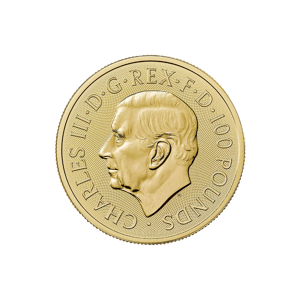
Gold’s historical role as money is not accidental. It possesses a unique combination of physical and economic properties (investment gold coins).
Key reasons gold became the dominant monetary metal include:
- Scarcity – global supply increases only about 1–2% per year
- Durability – gold does not corrode or degrade
- Divisibility – it can easily be melted and re-minted
- High value density – large value can be stored in small space
- Universal recognition across cultures and centuries
Most importantly, physical gold carries no counterparty risk. Unlike paper money or bank deposits, gold is not dependent on the stability of any institution.
Evolution and Legacy of the First Gold Coins
Today, the global financial system no longer operates on a classical gold standard, where currencies are directly convertible into gold.

However, gold continues to play an important role in the financial system as a store of value and investment asset.
Modern bullion coins, such as:
- Vienna Philharmonic
- Canadian Maple Leaf
- Australian Kangaroo
carry forward the same principles established by ancient coinage: guaranteed weight, purity, and trust issued by recognised mints.
While ancient coins served as everyday money, modern gold coins function primarily as investment instruments.
For investors, holding physical gold can help diversify portfolios, hedge against inflation, and preserve purchasing power during periods of economic uncertainty.
In many ways, the role gold plays today reflects the same purpose it served over 2,500 years ago – a trusted and durable form of wealth.
Gold price (XAU-GBP)
3,545.70 GBP/oz
+ GBP124.27
Silver price (XAG-GBP)
56.98 GBP/oz
+ GBP3.91