Tavex uses cookies to ensure website functionality and improve your user experience. Collecting data from cookies helps us provide the best experience for you, keeps your account secure and allows us to personalise advert content. You can find out more in our cookie policy.
Please select what cookies you allow us to use
Cookies are small files of letters and digits downloaded and saved on your computer or another device (for instance, a mobile phone, a tablet) and saved in your browser while you visit a website. They can be used to track the pages you visit on the website, save the information you enter or remember your preferences such as language settings as long as you’re browsing the website.
Cookie usage
Necessary cookies
| Cookie name | Cookie description | Cookie duration |
|---|---|---|
| tavex_cookie_consent | Stores cookie consent options selected | 60 weeks |
| tavex_customer | Tavex customer ID | 30 days |
| wp-wpml_current_language | Stores selected language | 1 day |
| AWSALB | AWS ALB sticky session cookie | 6 days |
| AWSALBCORS | AWS ALB sticky session cookie | 6 days |
| NO_CACHE | Used to disable page caching | 1 day |
| PHPSESSID | Identifier for PHP session | Session |
| latest_news | Helps to keep notifications relevant by storing the latest news shown | 29 days |
| latest_news_flash | Helps to keep notifications relevant by storing the latest news shown | 29 days |
| tavex_recently_viewed_products | List of recently viewed products | 1 day |
| tavex_compare_amount | Number of items in product comparison view | 1 day |
Preference cookies
| Cookie name | Cookie description | Cookie duration |
|---|---|---|
| chart-widget-tab-*-*-* | Remembers last chart options (i.e currency, time period, etc) | 29 days |
| archive_layout | Stores selected product layout on category pages | 1 day |
Targeting cookies
| Cookie name | Cookie description | Cookie duration |
|---|---|---|
| cartstack.com-* | Used for tracking abandoned shopping carts | 1 year |
| _omappvp | Used by OptinMonster for determining new vs. returning visitors. Expires in 11 years | 11 years |
| _omappvs | Used by OptinMonster for determining when a new visitor becomes a returning visitor | Session |
| om* | Used by OptinMonster to track interactions with campaigns | Persistent |
Analytical cookies
| Cookie name | Cookie description | Cookie duration |
|---|---|---|
| _ga | Used to distinguish users | 2 years |
| _gid | Used to distinguish users | 24 hours |
| _ga_* | Used to persist session state | 2 years |
| _gac_* | Contains campaign related information | 90 days |
| _gat_gtag_* | Used to throttle request rate | 1 minute |
| _fbc | Facebook advertisement cookie | 2 years |
| _fbp | Facebook cookie for distinguishing unique users | 2 years |

1oz Gold vs 1g Gold: Differences, Benefits, and Drawbacks for Investors
Published by honor in category Precious Metal Information Guides on 13.03.2026
Gold price (XAU-GBP)
3,527.92 GBP/oz
- GBP51.92
Silver price (XAG-GBP)
55.00 GBP/oz
- GBP1.54

Gold has served as a reliable store of value for thousands of years. From ancient civilisations to modern financial markets, it has remained one of the few assets trusted across cultures and economies.
In times of economic uncertainty, rising inflation, or geopolitical tension, many investors turn to physical gold as a way to preserve purchasing power and diversify their portfolios.
However, when purchasing gold bullion, investors must decide not only whether to buy gold, but also what size of gold product to buy.
Two of the most common options available on the market are 1 ounce (1oz) gold and 1 gram (1g) gold. While both contain pure gold and follow the same market price movements, they differ significantly in terms of price accessibility, premiums, liquidity, and investment strategy.
Understanding these differences can help investors make more informed decisions about which form of gold best suits their financial goals.
Quick Comparison: 1oz Gold vs 1g Gold
| Feature | 1oz Gold | 1g Gold |
| Weight | 31.1035 grams | 1 gram |
| Typical buyers | Investors | Entry-level buyers & gift buyers |
| Premium over spot | Lower | Higher |
| Liquidity | Higher | High but smaller resale value |
| Flexibility | Less divisible | Highly divisible |
| Price | Higher upfront cost | More affordable |
What Is 1oz Gold?
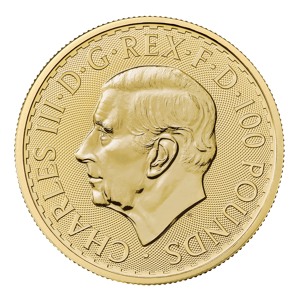
A 1oz gold bar or coin contains one troy ounce of gold, equivalent to 31.1035 grams. The troy ounce is the standard measurement used in global precious metals markets, and it forms the basis of gold pricing worldwide.

Because of this standardisation, 1oz gold products are among the most widely traded bullion items internationally. Investors will commonly encounter 1oz bars produced by globally recognised refineries such as PAMP, Valcambi, or The Royal Mint, as well as popular bullion coins including the Britannia, Maple Leaf, Krugerrand, and American Eagle.
The widespread recognition of these products makes them highly liquid. Dealers, investors, and financial institutions around the world are familiar with these formats, making them relatively easy to buy and sell.
For many investors, the 1oz format represents the core building block of a gold portfolio, offering a balance between value efficiency, liquidity, and practicality.
What Is 1g Gold?
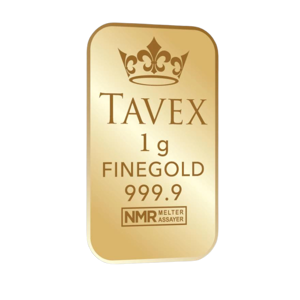
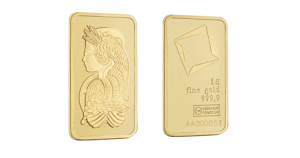
A 1 gram gold bar contains exactly one gram of fine gold, making it one of the smallest forms of physical bullion available to retail investors.
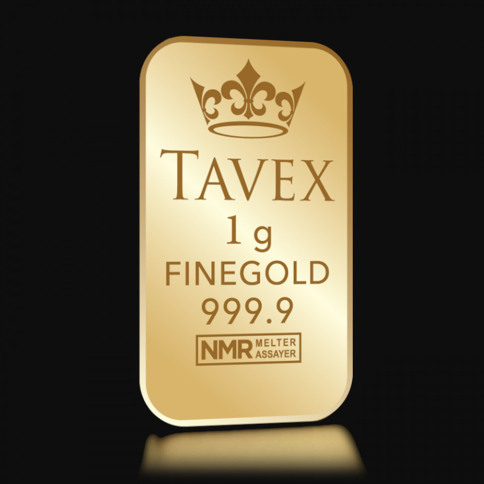
These bars are typically produced by major refineries and are often sealed in protective packaging known as certi-cards, which include authentication details such as weight, purity, and refinery branding. Despite their small size, they are manufactured to the same purity standards as larger gold bars, commonly 999.9 fine gold.
The main appeal of 1 g gold bars lies in its accessibility
Because each bar contains a small amount of gold, it allows individuals to start investing with relatively modest sums. This has made 1g bars particularly popular among first-time investors, savers who buy gold regularly, and people purchasing gold as a gift.
In many cultures around the world, small gold bars are also used as a form of portable wealth or savings, allowing individuals to accumulate gold gradually over time.
Benefits of Investing in 1oz Gold

1) Lower Premiums
One of the main advantages of buying 1oz gold is that it generally carries lower premiums relative to the spot price of gold.
Premiums represent the additional costs above the raw gold value that cover refining, manufacturing, transportation, and dealer margins. Because these costs are largely fixed regardless of the size of the bar, they represent a smaller percentage of the total value when applied to larger gold products.
As a result, investors purchasing 1 oz gold bars typically receive more gold for their money compared with smaller denominations. For individuals looking to maximise the amount of gold they hold for a given investment amount, larger bars and coins tend to offer better overall value.
2) Strong Global Liquidity
Another important benefit of 1oz gold is its global recognisability and liquidity. Standardised one-ounce bullion products are traded internationally and are widely accepted by precious metals dealers, banks, and investors.

Because they are so common, buyers and sellers generally have confidence in the authenticity and value of these products. This makes it easier to liquidate holdings quickly if necessary. Whether selling to a local bullion dealer or trading through international markets, 1oz gold products tend to have strong resale demand.
For investors who prioritise ease of trading and global recognition, 1oz gold is often considered one of the most practical forms of physical bullion.
3) Efficient for Long-Term Wealth Preservation
For investors with a long-term perspective, 1oz gold can be particularly appealing. Larger bars allow investors to store significant value in a relatively compact form while minimising the cost per gram.
Because of their efficiency, these products are commonly used by:
- long-term investors
- wealth preservation buyers
- institutional bullion investors
- central banks
Over time, lower premiums can translate into better investment efficiency, especially for those accumulating larger amounts of gold.
Drawbacks of 1oz Gold
1) Higher Upfront Cost
While 1oz gold is efficient from an investment perspective, it also requires a much larger initial outlay compared with smaller gold products.
The price of gold fluctuates constantly, but a single ounce typically costs several thousand pounds or dollars depending on market conditions. For many people, this can represent a significant purchase, which may limit accessibility for first-time investors or those who prefer to invest gradually.
2) Less Flexibility When Selling
Another limitation of larger gold bars is that they cannot easily be divided. If an investor owns a 1oz bar and needs to liquidate a small portion of their holdings, they must sell the entire bar.
This lack of divisibility can make it less convenient for those who want the option to sell gold in smaller increments.
Benefits of Investing in 1g Gold
1) Low Entry Cost
One of the most attractive aspects of 1g gold bars is their affordability. Because each bar contains only a small amount of gold, they allow individuals to start investing without committing large amounts of capital.
This makes 1g bars particularly appealing for:
- new investors entering the gold market
- people who prefer to accumulate gold gradually
- those following regular savings strategies
By purchasing small amounts over time, investors can build a meaningful gold position without needing to make large one-time purchases.
2) Excellent Divisibility
Another advantage of small gold bars is their flexibility. Because each bar represents a small unit of gold, investors can choose to sell only the amount they need.
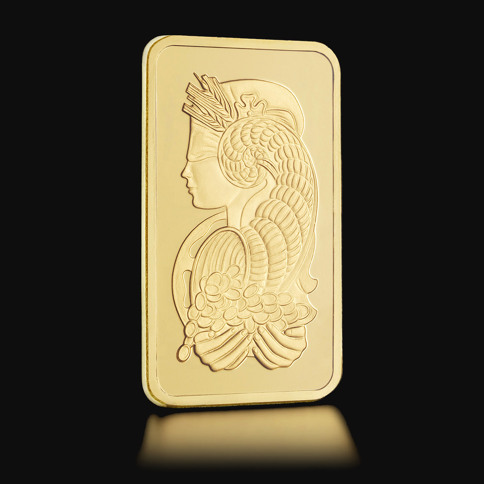
For example, someone holding multiple 1g bars could sell just a few grams while keeping the rest of their holdings intact. This level of control is not possible with larger bars unless they are melted or exchanged.
In this sense, small gold bars function almost like fractional units of wealth, offering flexibility similar to holding cash in smaller denominations.
3) Popular for Gifts and Collecting
1g gold bars are also widely used for gifting and commemorative purposes. Many refineries produce themed or collectible designs that make these bars appealing as presents for special occasions.
Gold has long been associated with celebrations, milestones, and cultural traditions. Small bars allow people to give meaningful gifts that carry both symbolic and intrinsic value.
Drawbacks of 1g Gold

1) Higher Premiums
Despite their accessibility, 1g gold bars tend to carry significantly higher premiums relative to their gold content.
Because manufacturing, packaging, and distribution costs are similar regardless of the bar’s size, these costs represent a larger proportion of the final price for smaller bars.
As a result, investors buying many small bars may pay noticeably more per gram compared with purchasing larger bullion products.
2) Storage Inefficiency
Another drawback of very small bars is that they can become less practical to store in large quantities. For example, it would take more than 31 individual 1g bars to equal one ounce of gold.
For investors building substantial holdings, managing and storing many small bars may become less efficient than owning fewer larger bars.
Key Differences Between 1oz and 1g Gold
The main difference between these two gold sizes lies in investment efficiency versus accessibility.
Larger gold bars, such as 1oz products, tend to be more efficient from a pricing perspective. Lower premiums mean investors receive more gold relative to the money spent. This makes them well suited for individuals focused on long-term wealth preservation.
Smaller bars, on the other hand, prioritise flexibility and accessibility
They allow investors to start small, build holdings gradually, and sell gold in smaller portions when needed.
Rather than viewing them as competing options, many investors see them as complementary tools within a broader precious metals strategy.
Frequently Asked Questions
Is 1oz gold a better investment than 1g gold?
For investors seeking the most efficient price per gram, 1oz gold is generally the better option. However, 1g gold offers greater affordability and flexibility.
Why is 1g gold more expensive per gram?
Smaller bars require the same manufacturing and packaging processes as larger bars, which increases their premium relative to their gold content.
Can you easily sell 1g gold?
Yes. Most bullion dealers buy back small gold bars, although the resale spread may be slightly wider compared with larger bullion products.
How many grams are in 1 ounce of gold?
One troy ounce of gold equals 31.1035 grams.
Final Thoughts
Both 1oz gold and 1g gold serve important purposes in the precious metals market.
Investors seeking efficiency and long-term value often prefer 1oz gold bars or coins, as they typically offer lower premiums and strong global liquidity. Meanwhile, those looking for flexibility, affordability, or gradual accumulation may find 1g gold bars more suitable.
For many investors, the most balanced approach is to combine both sizes—using larger bars for core holdings while keeping smaller bars for flexibility and accessibility.
Regardless of the size chosen, physical gold continues to play an important role as a tangible, globally recognised store of value in an uncertain financial world.
Gold price (XAU-GBP)
3,527.92 GBP/oz
- GBP51.92
Silver price (XAG-GBP)
55.00 GBP/oz
- GBP1.54